

What is a certificate of incumbency?
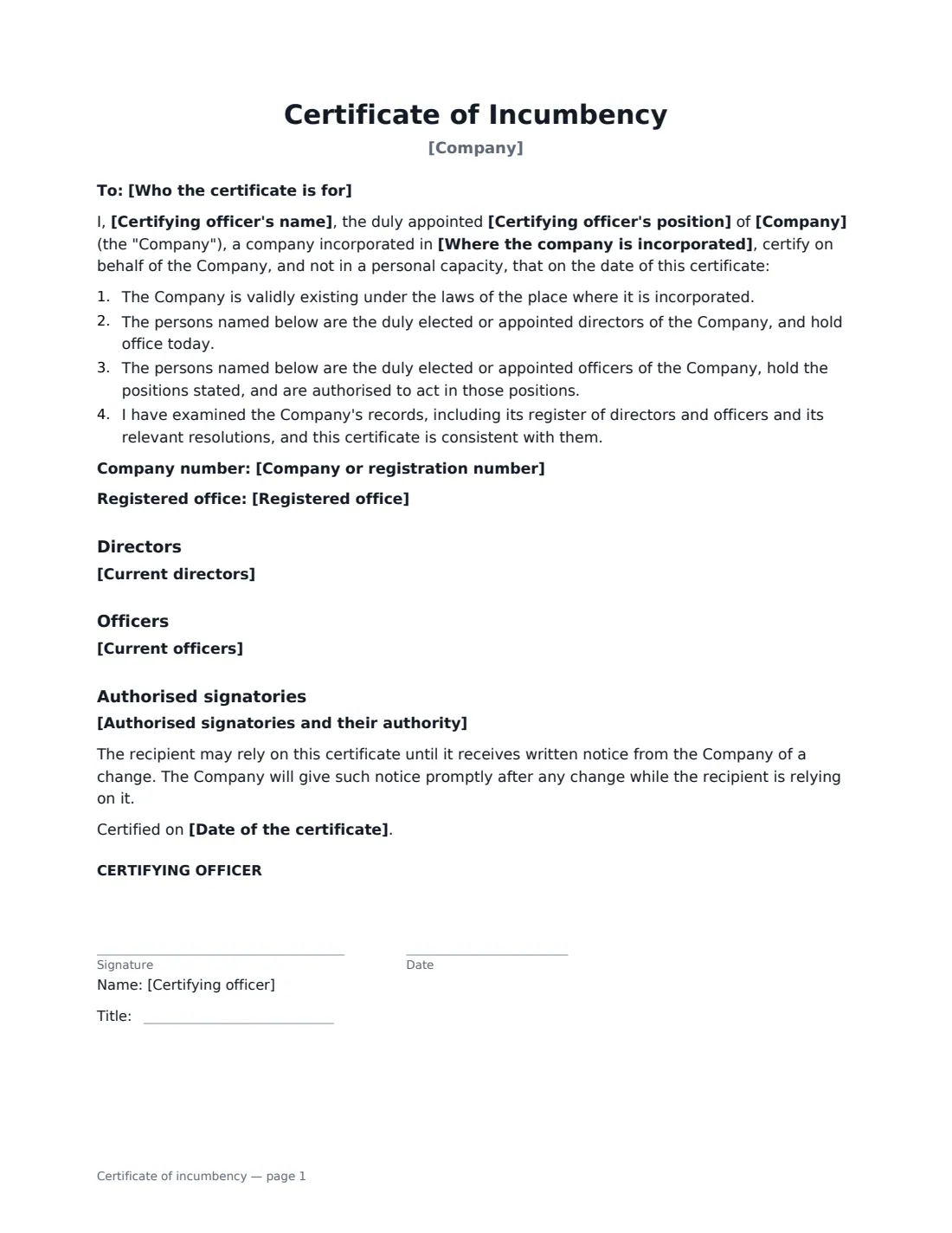
A certificate of incumbency (also called an officer's or secretary's certificate) is an official statement from a company about who holds its positions right now. Banks ask for one when opening accounts, lenders before a loan, and counterparties and foreign registries before relying on someone's signature.
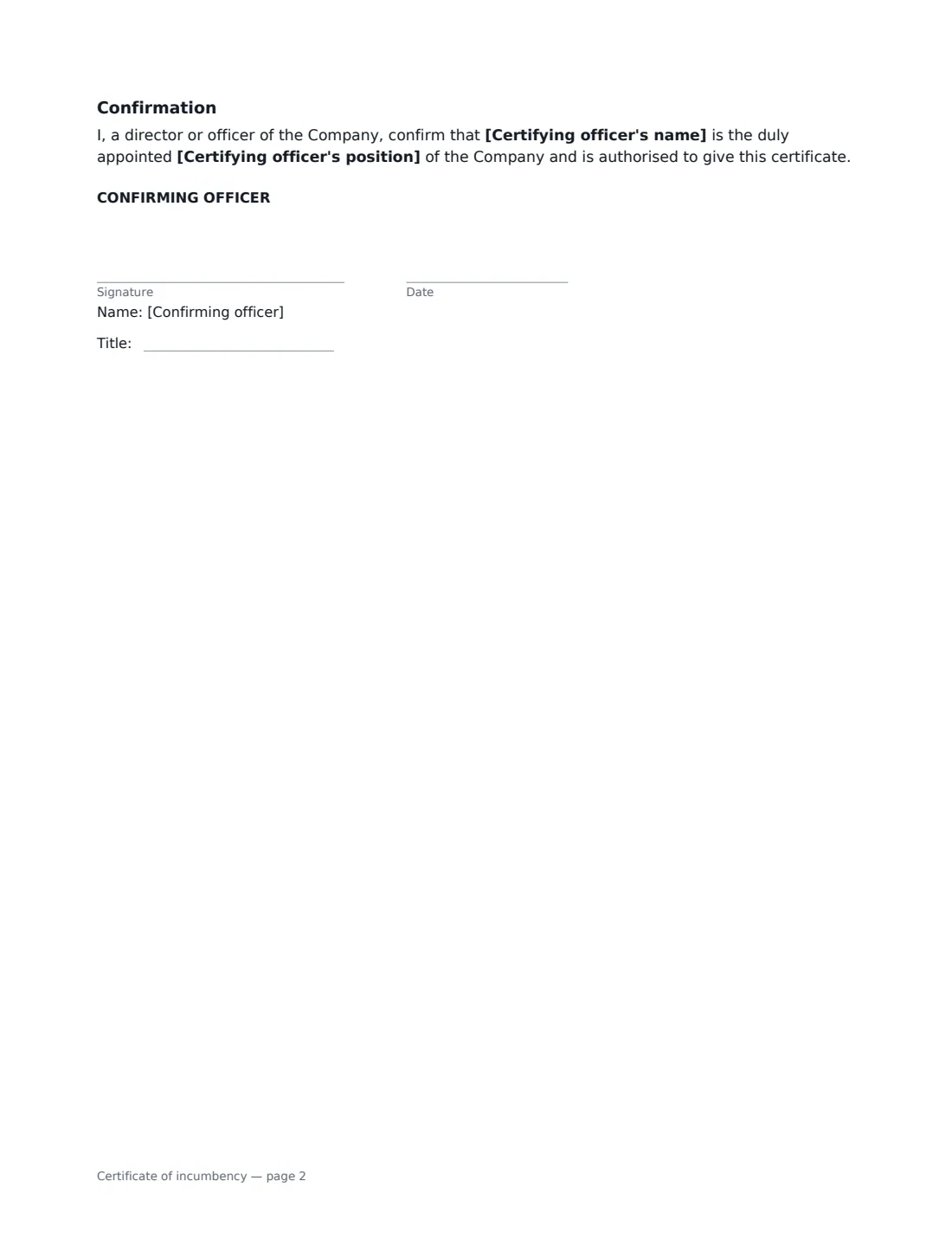
In this template the certifying officer — usually the secretary — confirms the company exists, lists its current directors and officers, and optionally its authorised signatories and their limits, based on the company's registers and resolutions. A second director or officer then confirms that the certifying officer holds their position, the usual way to avoid someone certifying themselves. The recipient may rely on it until told of a change.
- Best for
- Bank account opening, loans, KYC checks and cross-border deals
- Signed by
- A certifying officer and a second confirming officer
- Lists
- Directors, officers, optional signatories and authority
- Length
- 1–2 pages
When to Use a certificate of incumbency
- Opening or updating a business bank account
- A lender's conditions before drawing a loan
- A foreign customer verifying who may sign for your company
- Registering a branch or subsidiary abroad
- Updating a counterparty after an officer change
What You Fill In
11 blanks, then the name and email of each person who signs: certifying officer, confirming officer.
1 The company
- Date of the certificate*
- Company*
- Where the company is incorporated*
- Company or registration number
- Registered office
2 The certifying officer
- Certifying officer's name*
- Certifying officer's position*
3 Positions held
- Current directors*
- Current officers*
- Authorised signatories and their authority
- Who the certificate is for
4 Who signs
- Certifying officer signature and date, job title · Usually the company secretary.
- Confirming officer signature and date, job title · A different director or officer who confirms the certifying officer holds their position.
What the certificate of incumbency Covers
- Directors
- Officers
- Authorised signatories
- Confirmation
Using the certificate of incumbency, step by step
1 Enter the company
Name the company, where it is incorporated, its number and registered office.
2 Name the certifying officer
Usually the secretary. Enter their name and position.
3 List directors, officers and signatories
Copy from the company's registers. Only state signing authority that a board resolution or the company's rules actually give.
4 Sign and send
Add the certifying officer and a different director or officer to confirm. Send the signed PDF from VergeHR Files to the bank or recipient.
Tips Before You Send It
- Check the registers and recent resolutions before certifying; the recipient will rely on this.
- Some banks and foreign authorities need the certificate notarised or apostilled; ask before you sign.
- Issue a new certificate whenever a director, officer or signatory changes.
- Pair it with a board resolution if the recipient also needs proof that a transaction was approved.
Sign It Online In Minutes
- Fill in the blanks. Names, dates and amounts go straight into the agreement — the preview shows exactly where.
- Name who signs. Tick “This is me” for your own part. VergeHR builds the PDF with every signature, date box on the right line, and you can check or move anything before sending.
- Send it. Each signer gets a secure link and signs from any device — no account needed. The signed PDF, with an audit trail and a Certificate of Completion, is filed in Files and emailed to everyone.
Certificate of incumbency: frequently asked questions
Who should sign a certificate of incumbency?
Usually the company secretary, with another director or officer confirming the secretary's position. Some recipients have their own requirements.
Does it need to be notarised?
Not always. Many banks accept it signed; foreign registries and some lenders want it notarised or apostilled, which electronic signature does not provide.
How long is it valid?
It speaks as of its date. Many recipients want one dated within the last few months.
Is it the same as a board resolution?
No. A resolution records a decision. An incumbency certificate records who holds which positions.