

What is a seller's property disclosure statement?
Sellers are often expected — and in many places required — to tell buyers about known defects. A written disclosure statement makes that clear, consistent and provable, and reduces the risk of a dispute after the sale.
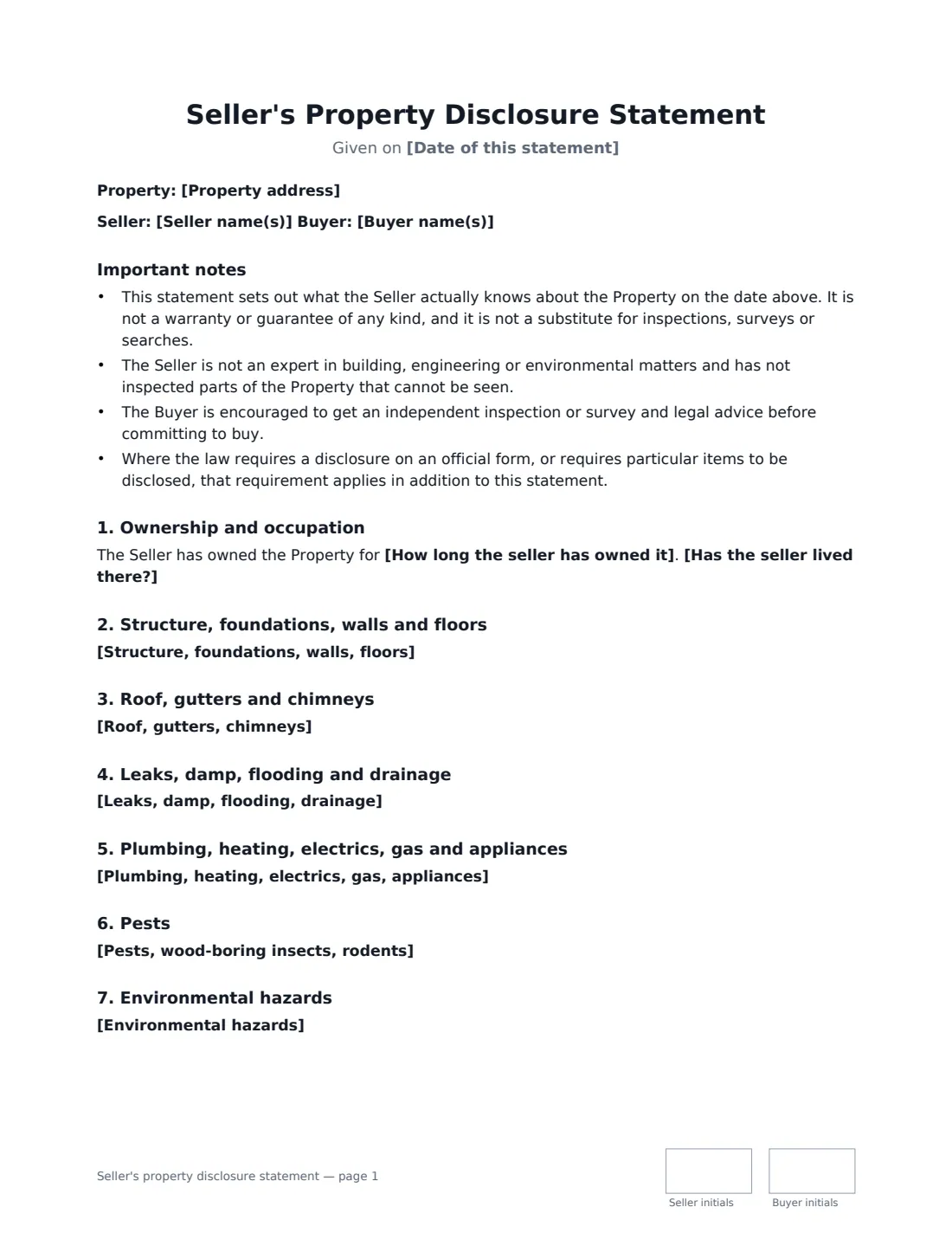
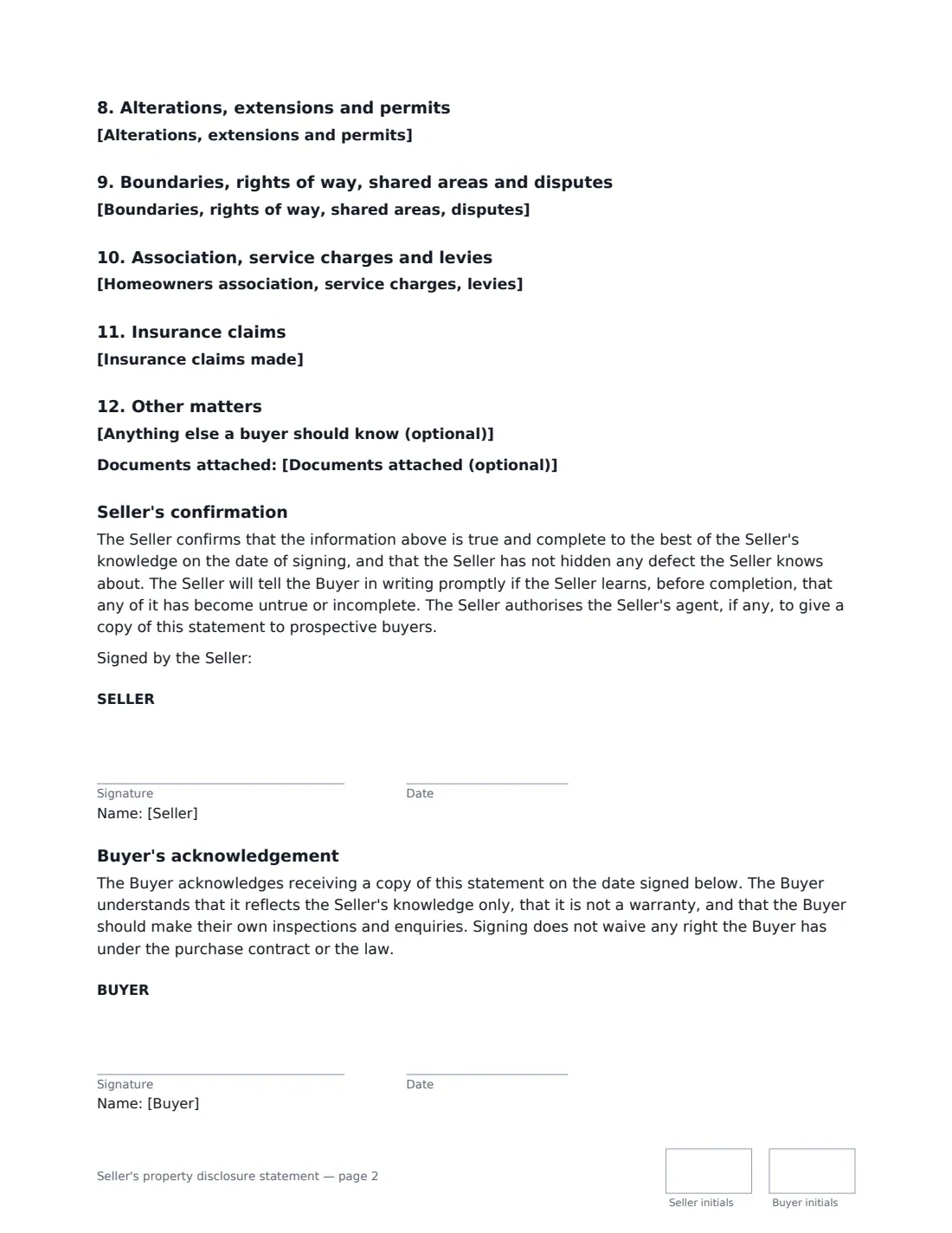
This template walks through ownership and occupation, structure, roof, leaks and drainage, plumbing and electrics, pests, environmental hazards, alterations and permits, boundaries and rights of way, association charges and insurance claims, with room for anything else and a list of attached documents. It makes clear it's the seller's knowledge, not a warranty, and encourages an independent inspection. Where an official form is required, use it; this can sit alongside it.
- Best for
- Private sellers and agents preparing a home sale
- Signed by
- Seller confirms; buyer acknowledges receipt
- Sections
- 12, from structure and roof to permits, boundaries and claims
- Length
- 2-3 pages
When to Use a seller's property disclosure statement
- A for-sale-by-owner seller who wants a clear record of what was disclosed
- An agent collecting information from a seller before listing
- Selling a rental where the owner hasn't lived in it
- Disclosing past water damage or unpermitted work up front
- Giving buyers a summary alongside an official form
What You Fill In
18 blanks, then the name and email of each person who signs: seller, buyer.
1 The property
- Date of this statement*
- Seller name(s)*
- Buyer name(s)*
- Property address*
- How long the seller has owned it*
- Has the seller lived there?* The Seller lives, or has lived, at the Property. · The Seller has never lived at the Property, so the Seller's knowledge of its condition is limited. · The Property is let to tenants, so the Seller's knowledge of its day-to-day condition is limited.
2 What the seller knows
- Structure, foundations, walls, floors*
- Roof, gutters, chimneys*
- Leaks, damp, flooding, drainage*
- Plumbing, heating, electrics, gas, appliances*
- Pests, wood-boring insects, rodents*
- Environmental hazards*
- Alterations, extensions and permits*
- Boundaries, rights of way, shared areas, disputes*
- Homeowners association, service charges, levies*
- Insurance claims made*
- Anything else a buyer should know (optional)
- Documents attached (optional)
3 Who signs
- Seller signature and date, initials on every page · The owner selling the property. If owned jointly, each owner should sign.
- Buyer signature and date, initials on every page · The prospective buyer who receives the statement and acknowledges it.
What the seller's property disclosure statement Covers
- Important notes
- Ownership and occupation
- Structure, foundations, walls and floors
- Roof, gutters and chimneys
- Leaks, damp, flooding and drainage
- Plumbing, heating, electrics, gas and appliances
- Pests
- Environmental hazards
- Alterations, extensions and permits
- Boundaries, rights of way, shared areas and disputes
- Association, service charges and levies
- Insurance claims
- Other matters
- Seller's confirmation
- Buyer's acknowledgement
Using the seller's property disclosure statement, step by step
1 Enter the basics
Add the property, seller and buyer, how long you've owned it and whether you've lived there.
2 Go section by section
Each section defaults to "No known problems" — change it wherever you know of an issue, past repair or claim. Be specific.
3 List documents
Note any warranties, certificates, permits or reports and attach them to the envelope.
4 Sign and send
Sign as seller and send to the buyer to acknowledge receipt.
Tips Before You Send It
- Only leave a default answer if it's true — when in doubt, disclose.
- If your area requires a prescribed disclosure form, complete that too; this statement doesn't replace it.
- Update the buyer in writing if anything changes before completion.
- Keep the signed statement and attachments in Files with the sale paperwork.
Sign It Online In Minutes
- Fill in the blanks. Names, dates and amounts go straight into the agreement — the preview shows exactly where.
- Name who signs. Tick “This is me” for your own part. VergeHR builds the PDF with every signature, date and initials box on the right line, and you can check or move anything before sending.
- Send it. Each signer gets a secure link and signs from any device — no account needed. The signed PDF, with an audit trail and a Certificate of Completion, is filed in Files and emailed to everyone.
Seller's property disclosure statement: frequently asked questions
Is this a warranty?
No. It states what the seller actually knows on the date signed, and says it is not a warranty or a substitute for inspections, surveys or searches.
Does the buyer agree with the statement by signing?
The buyer acknowledges receiving it and understands it reflects the seller's knowledge only. Signing doesn't waive any right under the purchase contract or the law.
Do I still need my state's or country's form?
Yes, where one is required. The template says any legally required form or disclosure applies in addition to this statement.
Is an e-signed disclosure statement valid?
Electronic signatures are generally accepted for ordinary agreements like a disclosure statement in the US (ESIGN Act and UETA), the UK, the EU (eIDAS) and Canada, though local rules can add requirements. VergeHR keeps an audit trail and a Certificate of Completion with the signed PDF.