

What is a building rules acknowledgement?
Apartment buildings, condos and shared houses run more smoothly when everyone knows the rules. A building rules acknowledgement (sometimes called house rules or community rules) sets out how residents should use the building and its shared spaces, and records that each resident received the rules and agreed to follow them — useful when a new tenant moves in, when rules change, or when a problem needs raising.
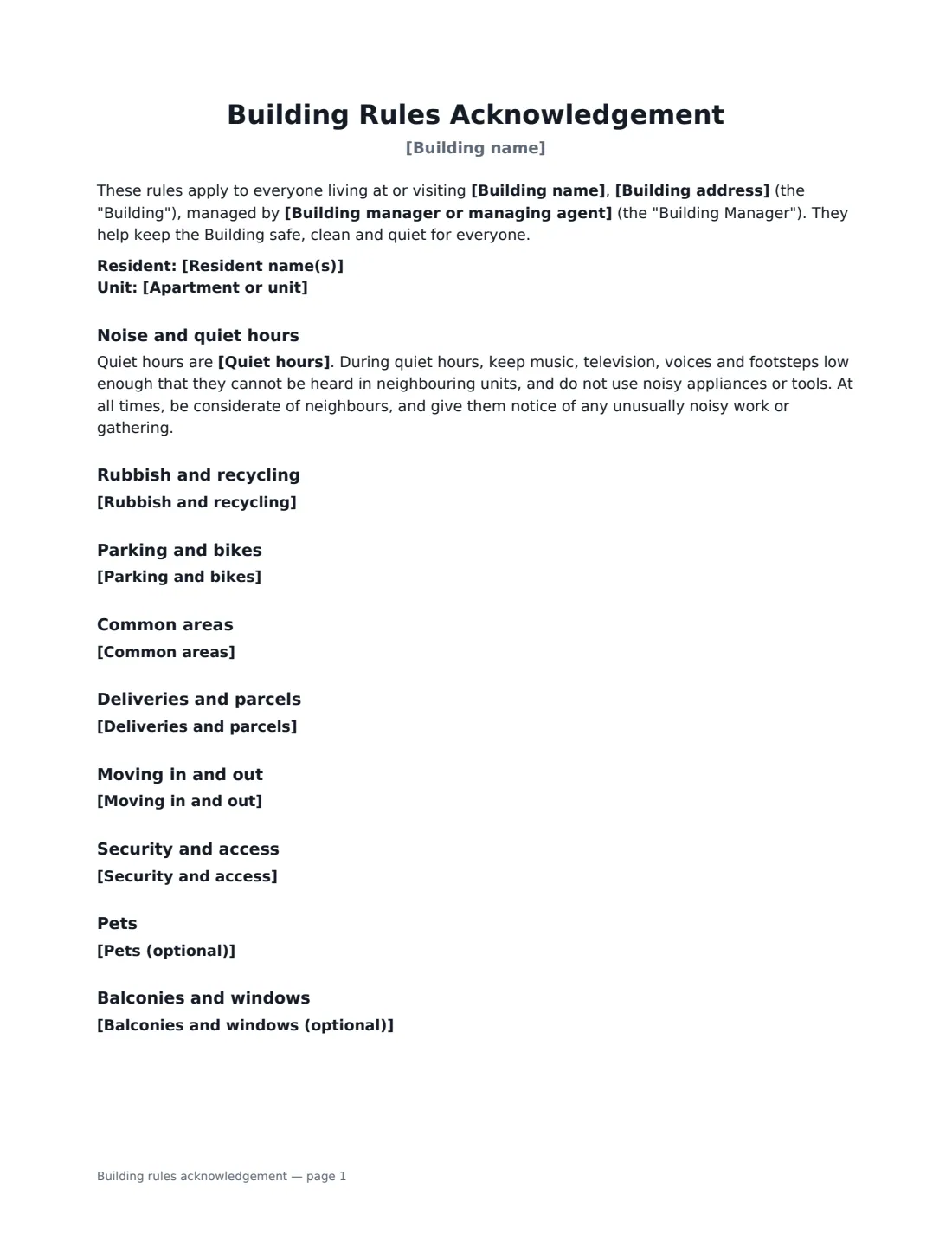
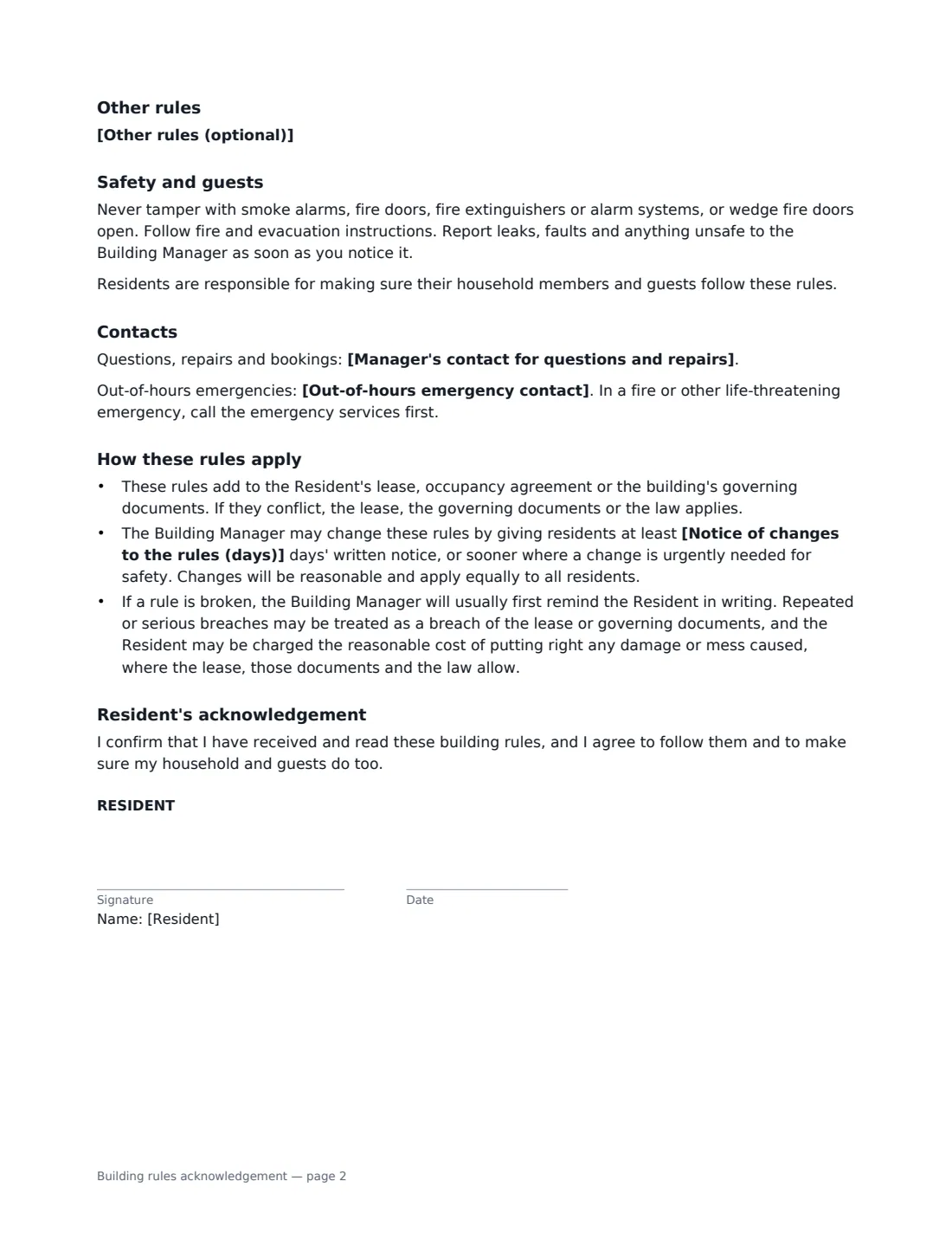
This template comes with sensible default wording you can edit for each topic: quiet hours; rubbish and recycling; parking and bikes; keeping corridors and stairs clear; deliveries and parcels; booking and protecting the building when moving in or out; and security, fobs and keys. Optional sections cover pets, balconies and windows, and any other rules. It adds fire and safety rules, makes residents responsible for their household and guests, and lists contacts for repairs and out-of-hours emergencies. It explains that the rules sit alongside the lease or building documents — which prevail if they conflict — how rules can be changed with written notice, and how breaches are handled. The resident and the building manager both sign.
- Best for
- Apartment buildings, condos, student housing and shared houses
- Signed by
- Each resident and the building manager
- Rules included
- Noise, bins, parking, common areas, deliveries, moving, security — all editable
- Length
- 2-3 pages
When to Use a building rules acknowledgement
- Onboarding new tenants when they move into an apartment building
- Rolling out updated rules to every resident after a change
- Student accommodation or co-living with shared kitchens and lounges
- A condo or homeowners' association reminding owners and renters of the rules
- Documenting that a resident received the rules before a breach is raised
What You Fill In
19 blanks, then the name and email of each person who signs: resident, building manager.
1 The building
- Date*
- Building name*
- Building address*
- Building manager or managing agent*
- Manager's contact for questions and repairs*
- Out-of-hours emergency contact
2 The resident
- Resident name(s)*
- Apartment or unit*
3 The rules
- Quiet hours*
- Rubbish and recycling*
- Parking and bikes*
- Common areas*
- Deliveries and parcels
- Moving in and out
- Security and access
- Pets (optional)
- Balconies and windows (optional)
- Other rules (optional)
- Notice of changes to the rules (days)*
4 Who signs
- Resident signature and date · The tenant, owner or occupier confirming the rules. Each adult resident can sign their own copy.
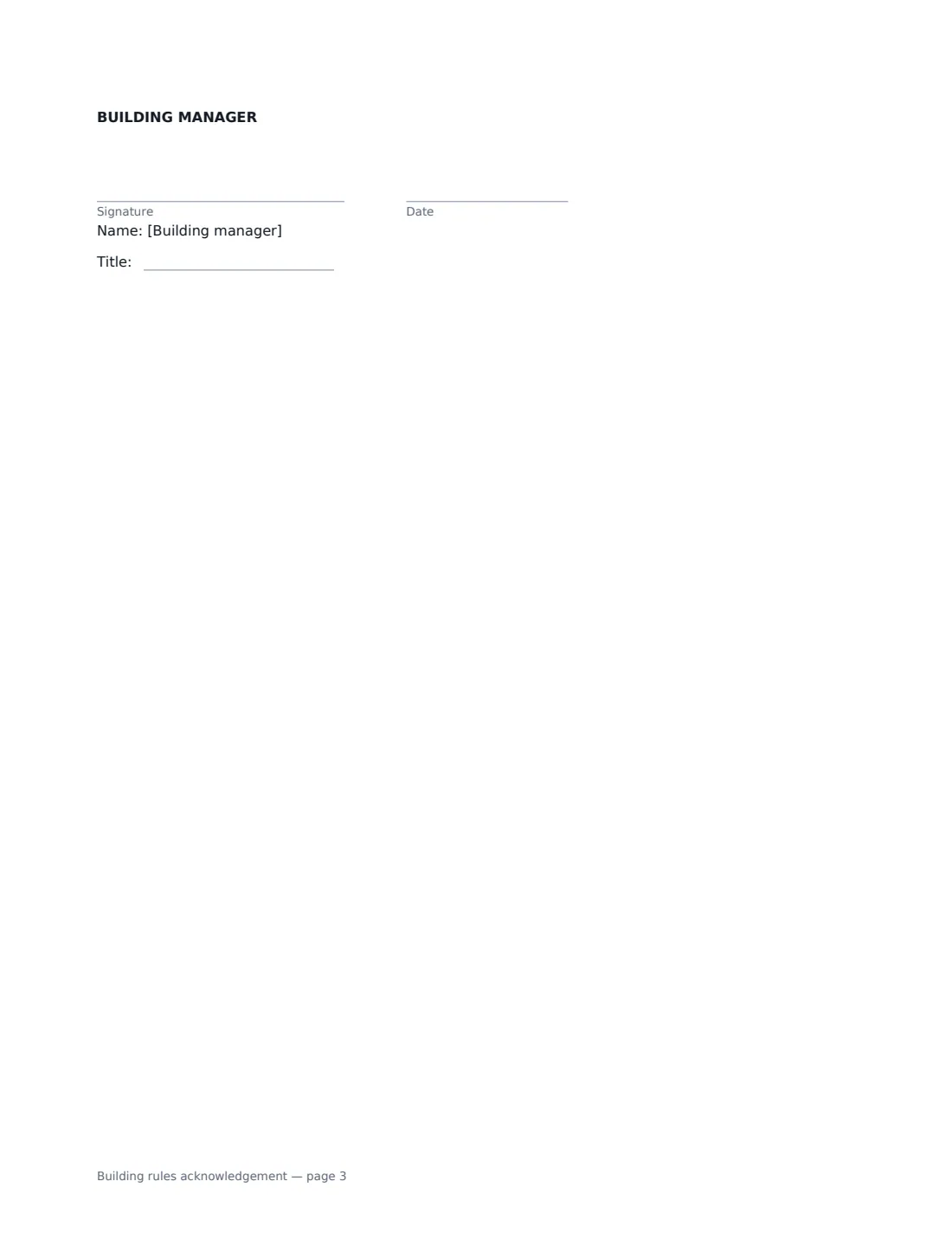
- Building manager signature and date, job title · The building manager, managing agent, landlord or association representative issuing the rules.
What the building rules acknowledgement Covers
- Noise and quiet hours
- Rubbish and recycling
- Parking and bikes
- Common areas
- Deliveries and parcels
- Moving in and out
- Security and access
- Pets
- Balconies and windows
- Other rules
- Safety and guests
- Contacts
- How these rules apply
- Resident's acknowledgement
Using the building rules acknowledgement, step by step
1 Enter the building and resident
Add the building name and address, the manager or managing agent, a contact for questions and repairs, and an out-of-hours emergency number. Then add the resident's name and unit.
2 Edit the rules for your building
Each topic starts with plain default wording — change it to match your building: your quiet hours, where the bins are, how parking works, parcel arrangements, move booking and security. Clear an optional section to leave it out.
3 Set how rules can change
Choose how many days' written notice residents get before a rule changes. Urgent safety changes can apply sooner.
4 Send to each resident
Send one copy per resident, or per household. Each resident signs the acknowledgement and you countersign as building manager; the signed copies are kept together in Files.
Tips Before You Send It
- Keep rules reasonable, specific and applied equally to everyone.
- Make sure the rules don't contradict the lease or the building's governing documents — if they do, those documents prevail.
- Fire routes and fire doors matter most. Keep the common-areas rule firm on clear corridors and stairs.
- When you change the rules, send the new version for a fresh acknowledgement so you have a record that each resident received it.
Sign It Online In Minutes
- Fill in the blanks. Names, dates and amounts go straight into the agreement — the preview shows exactly where.
- Name who signs. Tick “This is me” for your own part. VergeHR builds the PDF with every signature, date box on the right line, and you can check or move anything before sending.
- Send it. Each signer gets a secure link and signs from any device — no account needed. The signed PDF, with an audit trail and a Certificate of Completion, is filed in Files and emailed to everyone.
Building rules acknowledgement: frequently asked questions
Are building rules legally binding on tenants?
They usually bind tenants when the lease or the building's governing documents allow the landlord or association to make rules. The acknowledgement says the rules add to those documents and that the lease, governing documents or law prevail if they conflict.
Can I fine residents for breaking the rules?
The template doesn't create fines. It allows reminders, treating serious breaches under the lease, and charging the reasonable cost of putting right damage or mess — only where the lease, the governing documents and the law allow.
Can I change the rules later?
Yes, with the written notice you set, or sooner for urgent safety reasons. Changes must be reasonable and apply equally to all residents.
Is an electronic acknowledgement enough?
Electronic signatures are generally valid in the US (ESIGN Act and UETA), the UK, the EU (eIDAS) and Canada. VergeHR's audit trail shows when each resident signed.