

What is a house sitting agreement?
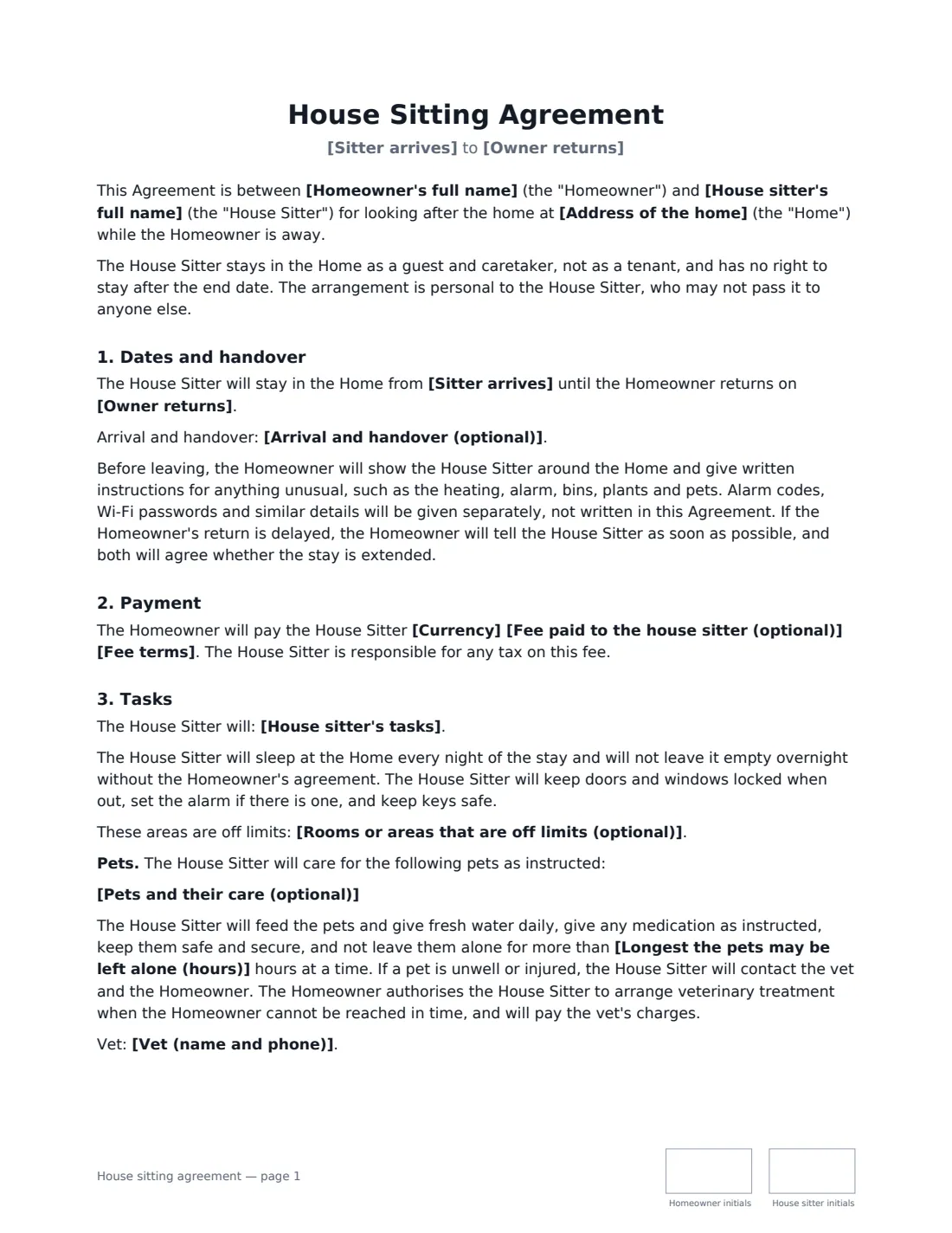
A house sitting agreement sets out what a house sitter will do while the homeowner is away, and what they may and may not do in the home. It works whether the sitter is a friend staying for free, someone found through a house-sitting website who looks after the home in exchange for somewhere to stay, or a paid professional. A short written agreement avoids the awkward questions later: were guests allowed, who pays for the plumber, could the car be used, and in what state should the home be left?
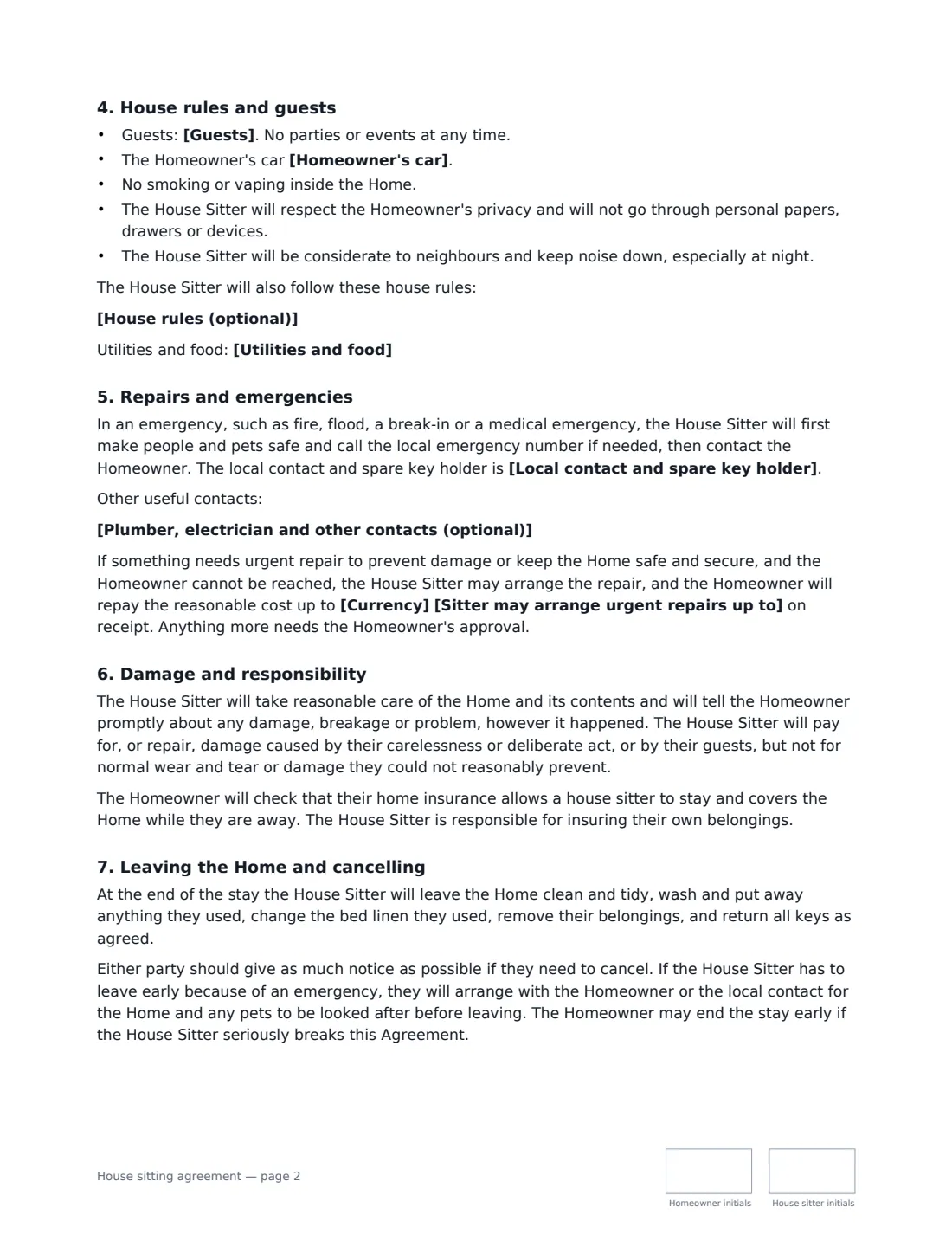
This template records the home, the dates and handover, and whether the sitter is paid a fee or stays free in return for the tasks. You list the daily tasks — mail, plants, bins, security checks — and any pets with their feeding, walks and medication, the vet, and how long pets may be left alone. Choose the rule on overnight guests and whether the car may be used, add house rules and off-limits rooms, and say how utilities and food are handled. The emergencies section names a local contact and key holder, lists tradespeople, and lets you set an amount the sitter can spend on urgent repairs without asking first. It also covers damage, insurance, leaving the home and cancelling, and makes clear the sitter is a guest, not a tenant.
- Best for
- Holidays, work trips and longer absences — paid or free house sits
- Signed by
- The homeowner and the house sitter
- Covers
- Tasks, pets, guests, car, utilities, urgent repairs, damage and emergencies
- Length
- About 2-3 pages, initialled by both on every page
When to Use a house sitting agreement
- A friend or relative staying in your home while you travel
- A sitter found through a house-sitting website, staying free in return for pet and home care
- A paid professional house sitter for a long trip
- Someone watching a holiday home or second property for a season
- Students or trusted neighbours looking after the home over the holidays
What You Fill In
25 blanks, then the name and email of each person who signs: homeowner, house sitter.
1 The home
- Homeowner's full name*
- Homeowner's phone and email while away*
- Address of the home*
- Rooms or areas that are off limits (optional)
2 The house sitter
- House sitter's full name*
- House sitter's phone*
3 Dates and payment
- Sitter arrives*
- Owner returns*
- Arrival and handover (optional)
- Currency
- Fee paid to the house sitter (optional)
- Fee terms
4 Tasks
- House sitter's tasks*
- Pets and their care (optional)
- Vet (name and phone)
- Longest the pets may be left alone (hours)
5 House rules
- Guests* No overnight guests · Overnight guests only with the homeowner's prior agreement · The house sitter's partner may stay
- House rules (optional)
- Homeowner's car* may not be used · may be used as set out below
- Car use details
- Utilities and food*
6 Emergencies
- Local contact and spare key holder*
- Plumber, electrician and other contacts (optional)
- Sitter may arrange urgent repairs up to
- Governing law (optional)
7 Who signs
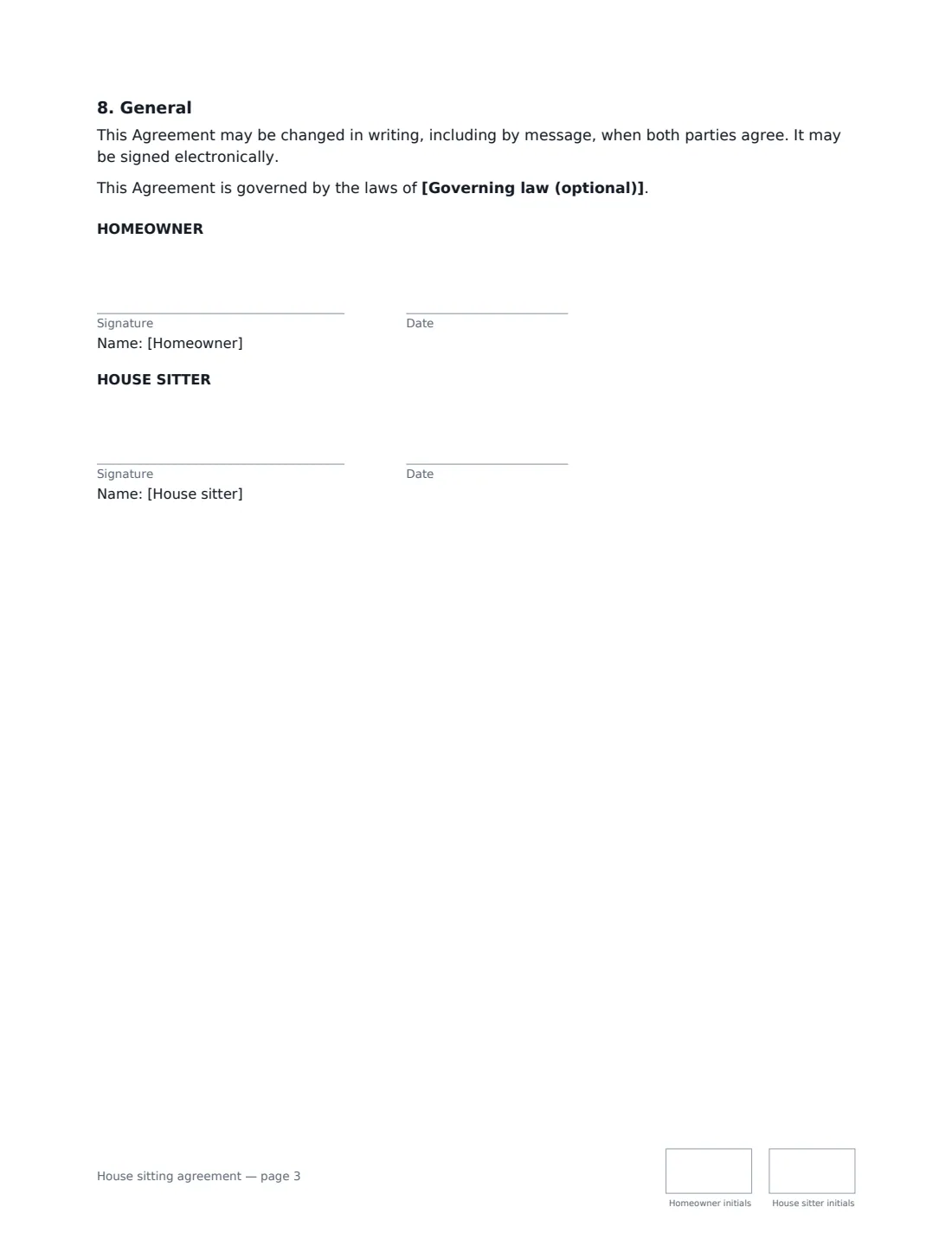
- Homeowner signature and date, initials on every page · The owner or tenant of the home.
- House sitter signature and date, initials on every page
What the house sitting agreement Covers
- Dates and handover
- Payment
- Tasks
- House rules and guests
- Repairs and emergencies
- Damage and responsibility
- Leaving the Home and cancelling
- General
Using the house sitting agreement, step by step
1 Add the home and the dates
Enter your address and how to reach you while you're away, the sitter's details, and the arrival and return dates. Add handover details such as a walk-through time or where the keys are left. Enter a fee only if you are paying the sitter; leave it empty for a free stay.
2 List the tasks and the pets
Edit the default list of tasks so it matches your home. If there are pets, describe each one's feeding, walks and medication, add the vet, and set the longest time they may be left alone.
3 Set the house rules
Choose the rule on overnight guests, whether the car may be used (and on what terms), and add any house rules or rooms that are off limits. Adjust the utilities and food paragraph if you share costs differently.
4 Plan for emergencies and send
Name a local contact who holds a spare key, list your plumber, electrician or alarm company, and set how much the sitter may spend on urgent repairs without asking. Add the sitter as a signer and send.
Tips Before You Send It
- Tell your home insurer you'll have a house sitter — some policies change cover when a home is left with someone else or empty for a long time.
- Don't write alarm codes or Wi-Fi passwords in the agreement; give them separately. The template says so.
- Leave a printed sheet by the door with the vet, the local contact, the water shut-off and the fuse box location.
- If the sitter will drive your car, check your motor insurance covers them first.
- Agree a check-in rhythm — a photo of the pets or a quick message every couple of days is reassuring on both sides.
Sign It Online In Minutes
- Fill in the blanks. Names, dates and amounts go straight into the agreement — the preview shows exactly where.
- Name who signs. Tick “This is me” for your own part. VergeHR builds the PDF with every signature, date and initials box on the right line, and you can check or move anything before sending.
- Send it. Each signer gets a secure link and signs from any device — no account needed. The signed PDF, with an audit trail and a Certificate of Completion, is filed in Files and emailed to everyone.
House sitting agreement: frequently asked questions
Does a house sitter have tenant rights?
The agreement states that the sitter stays as a guest and caretaker, not a tenant, and has no right to stay after the end date. Whether that holds in every case depends on local law and on the facts, especially for long stays or where rent is paid, so keep the arrangement short and clearly tied to the tasks.
Who pays if something breaks?
The sitter pays for damage caused by their own carelessness or by their guests, but not for normal wear and tear or damage they couldn't prevent. For urgent repairs, you can set an amount the sitter may spend without asking, which you repay on receipt.
Can I use this for pet sitting only?
If the sitter isn't staying in your home, the pet sitting agreement is a better fit. Use this one when someone lives in your home while you're away, with or without pets. For a longer-term arrangement where someone lives on and looks after a property, possibly with pay or accommodation in return, the property caretaker agreement fits better.
Is an electronically signed house sitting agreement valid?
Electronic signatures are generally valid for ordinary agreements like this in the US (ESIGN Act and UETA), the UK, the EU (eIDAS) and Canada. VergeHR keeps an audit trail and a Certificate of Completion with the signed PDF.
Is this template free?
Yes. It is free to use with the eSignature app in VergeHR, and your house sitter doesn't need a VergeHR login to sign.