

What is a security deposit return statement?
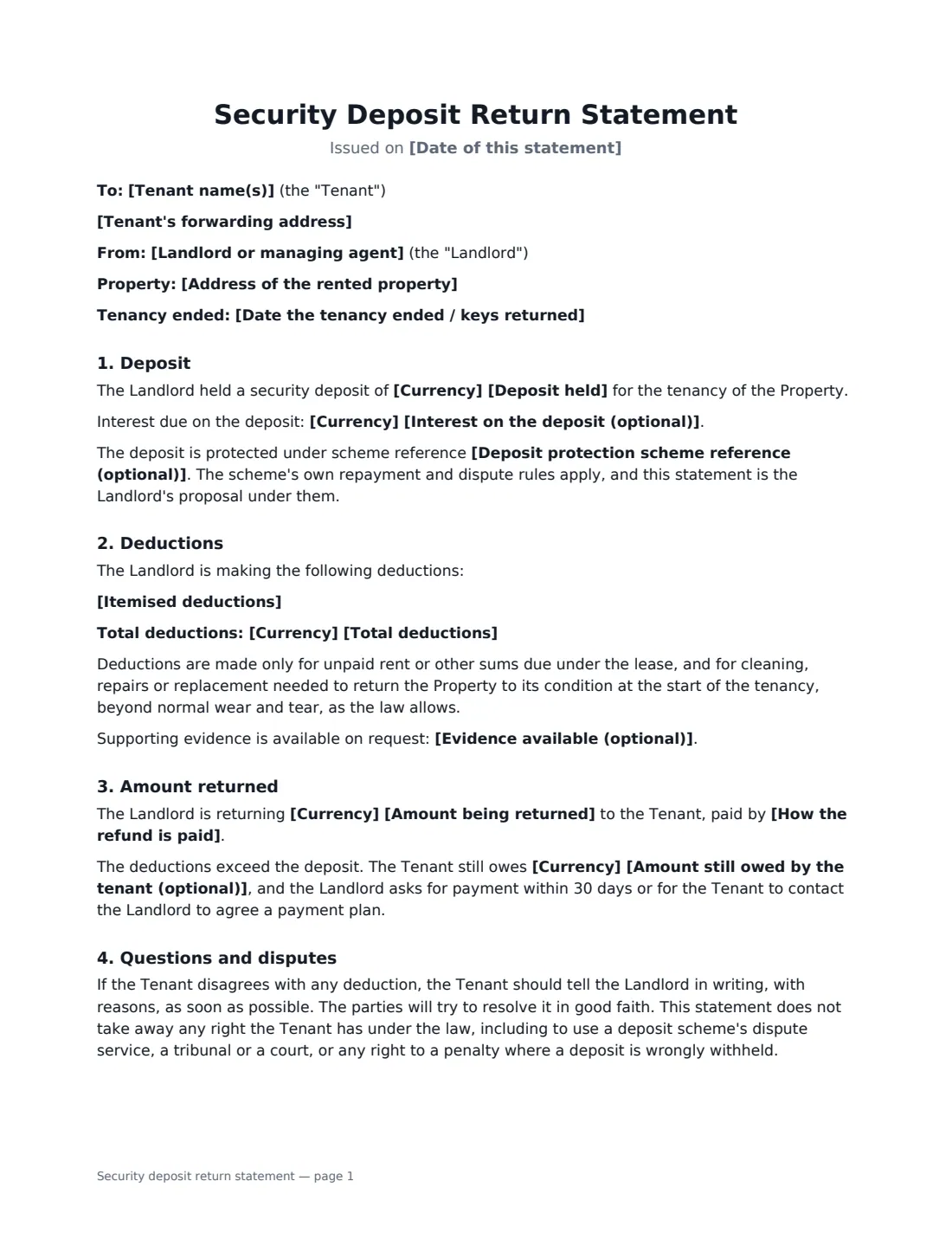
At the end of a tenancy, the landlord usually has to return the deposit, less any lawful deductions, with an itemised list — often within a deadline set by law. A clear statement reduces disputes and gives you a record that it was sent.
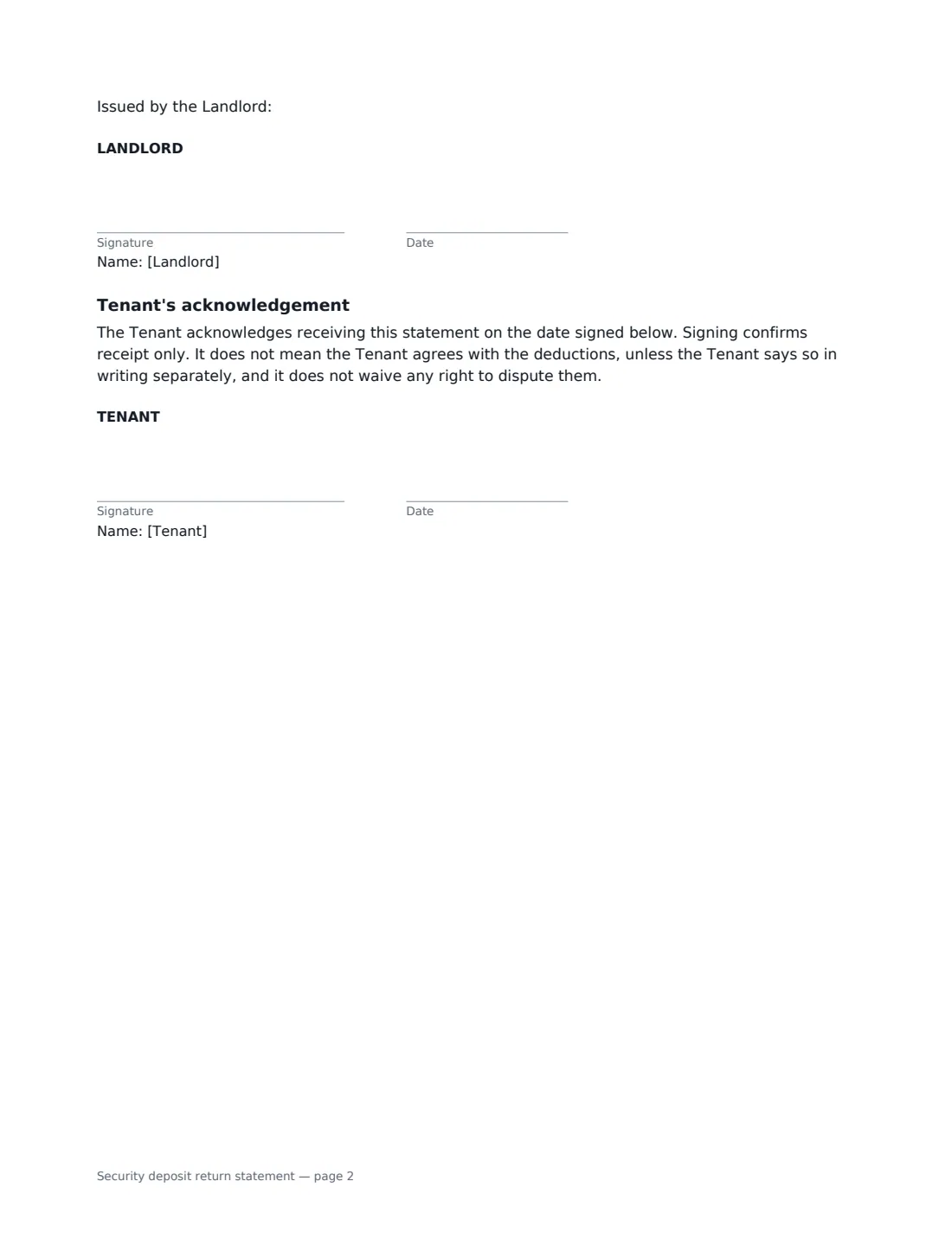
This template records the deposit held and any interest, a deposit-scheme reference if there is one, itemised deductions with a total, the amount returned and how, and any balance still owed. It explains what deductions can cover, offers evidence on request, and keeps the tenant's right to dispute. The tenant signs to acknowledge receipt, which is not agreement.
- Best for
- Returning a residential deposit at move-out
- Signed by
- Landlord issues; tenant acknowledges receipt
- Includes
- Itemised deductions, total, refund amount and method, any balance owed
- Length
- 1-2 pages
When to Use a security deposit return statement
- Returning a deposit in full with no deductions
- Explaining deductions for cleaning, damage or unpaid rent
- Proposing a split under a deposit protection scheme
- Recording a balance still owed when damage exceeds the deposit
- Keeping an organised record across several rental units
What You Fill In
16 blanks, then the name and email of each person who signs: landlord, tenant.
1 The tenancy
- Date of this statement*
- Landlord or managing agent*
- Tenant name(s)*
- Address of the rented property*
- Tenant's forwarding address
- Date the tenancy ended / keys returned*
2 The deposit
- Currency*
- Deposit held*
- Interest on the deposit (optional)
- Deposit protection scheme reference (optional)
3 Deductions
- Itemised deductions
- Total deductions
- Amount being returned*
- Amount still owed by the tenant (optional)
- How the refund is paid*
- Evidence available (optional)
4 Who signs
- Landlord signature and date · The landlord or managing agent who held the deposit.
- Tenant signature and date · The former tenant receiving the statement.
What the security deposit return statement Covers
- Deposit
- Deductions
- Amount returned
- Questions and disputes
- Tenant's acknowledgement
Using the security deposit return statement, step by step
1 Enter the tenancy
Add the landlord, tenant, property, forwarding address and the date the tenancy ended.
2 Record the deposit
Enter the amount held, any interest due and any scheme reference.
3 Itemise deductions
List each deduction on its own line with the cost, enter the total, the amount returned and how it's paid. Leave deductions empty for a full refund.
4 Send it on time
Sign and send. The tenant acknowledges receipt; the audit trail records when it was sent.
Tips Before You Send It
- Deadlines for returning deposits are set by local law and are often short — check yours and send early.
- Deductions are normally limited to unpaid rent and damage beyond normal wear and tear. Compare against the move-in report.
- Keep photos, receipts and quotes for every deduction; the statement offers them on request.
- If the deposit is in a protection scheme, its own repayment and dispute rules apply.
Sign It Online In Minutes
- Fill in the blanks. Names, dates and amounts go straight into the agreement — the preview shows exactly where.
- Name who signs. Tick “This is me” for your own part. VergeHR builds the PDF with every signature, date box on the right line, and you can check or move anything before sending.
- Send it. Each signer gets a secure link and signs from any device — no account needed. The signed PDF, with an audit trail and a Certificate of Completion, is filed in Files and emailed to everyone.
Security deposit return statement: frequently asked questions
Does the tenant's signature mean they accept the deductions?
No. The acknowledgement confirms receipt only and says it doesn't waive any right to dispute the deductions.
What can I deduct for?
Generally unpaid rent or other sums due under the lease, and cleaning or repairs needed to return the property to its starting condition, beyond normal wear and tear — as local law allows.
What if damage is more than the deposit?
Enter the balance still owed. The statement asks for payment within 30 days or contact to agree a payment plan.
Is an e-signed deposit statement valid?
Electronic signatures are generally accepted for ordinary agreements like a deposit statement in the US (ESIGN Act and UETA), the UK, the EU (eIDAS) and Canada, though local rules can add requirements. VergeHR keeps an audit trail and a Certificate of Completion with the signed PDF.