

What is a tenant alteration consent?
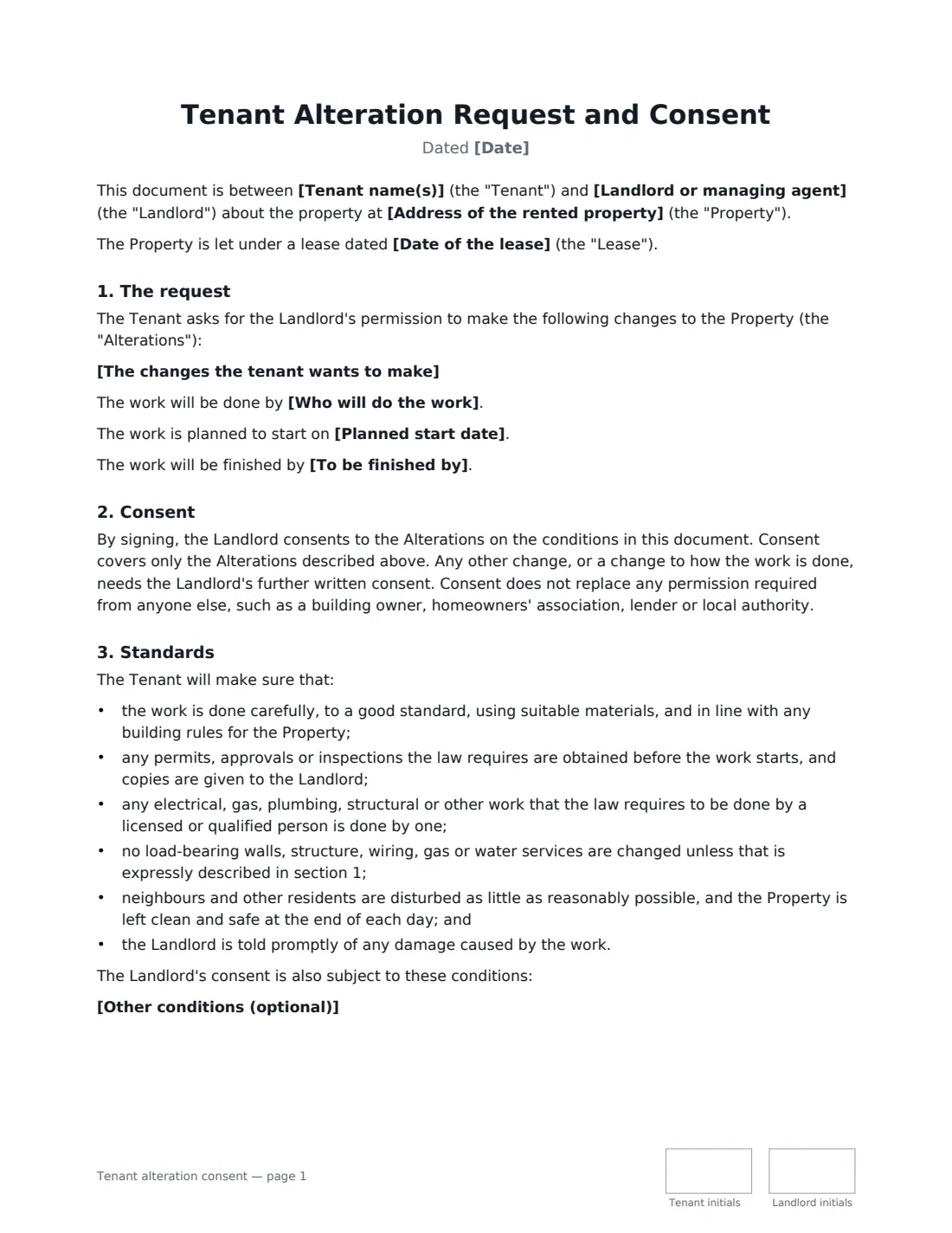
Most leases say a tenant can't make alterations without the landlord's written consent. Painting a bedroom, putting up shelves, fitting a dishwasher or swapping light fittings all count. A written request and consent protects both sides: the tenant knows the work is approved and on what terms, and the landlord knows exactly what's being done and what happens when the tenant leaves.
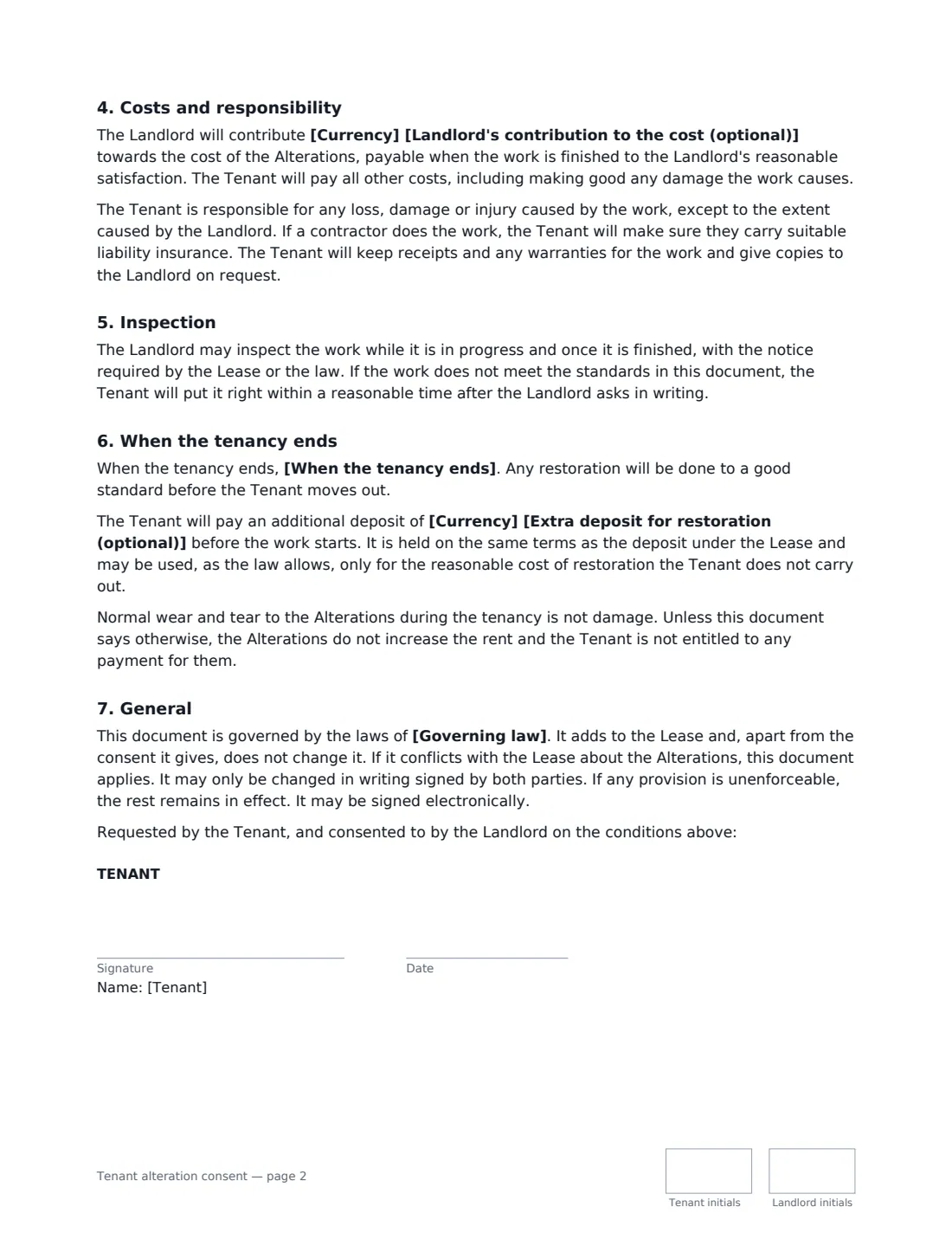
In this template the tenant describes the changes — rooms, materials, colours and fixings — who will do the work and when. By signing, the landlord consents to those alterations only, subject to conditions: good workmanship, permits and qualified trades where the law requires them, no structural or services changes that aren't described, minimal disturbance, and prompt reporting of damage. You can add the landlord's own conditions and a contribution to the cost. It covers the tenant's responsibility for the work, inspection, and — the key decision — what happens at the end of the tenancy: the tenant restores the property, the alterations stay, or they stay unless the landlord asks for removal before the tenancy ends. An optional restoration deposit is available where the law allows.
- Best for
- Painting, shelving, fixtures, appliances and other non-structural changes
- Signed by
- Tenant (request) and landlord (consent), initialled on every page
- End of tenancy
- Tenant restores, alterations stay, or they stay unless the landlord asks for removal
- Length
- 2 pages
When to Use a tenant alteration consent
- Painting a room a different colour
- Putting up shelves, picture rails, curtain poles or a TV bracket
- Installing a dishwasher, washing machine or new light fittings
- Adding a garden shed, planters or outdoor lighting
- Accessibility adaptations such as grab rails (check local law — some must be allowed)
What You Fill In
15 blanks, then the name and email of each person who signs: tenant, landlord.
1 The tenancy
- Date*
- Tenant name(s)*
- Landlord or managing agent*
- Address of the rented property*
- Date of the lease
2 The changes
- The changes the tenant wants to make*
- Who will do the work* the Tenant personally · a suitably qualified contractor chosen by the Tenant · a contractor approved in advance by the Landlord
- Planned start date
- To be finished by
3 Costs and the end of the tenancy
- Currency*
- Landlord's contribution to the cost (optional)
- When the tenancy ends* the Tenant must remove the Alterations and restore the affected areas to their original condition, apart from normal wear and tear · the Alterations may stay and will belong to the Landlord, without any payment to the Tenant · the Tenant must remove the Alterations and restore the affected areas only if the Landlord asks in writing a reasonable time before the tenancy ends; otherwise they may stay and will belong to the Landlord, without any payment to the Tenant
- Extra deposit for restoration (optional)
4 Conditions
- Other conditions (optional)
- Governing law*
5 Who signs
- Tenant signature and date, initials on every page · The tenant asking to make the changes.
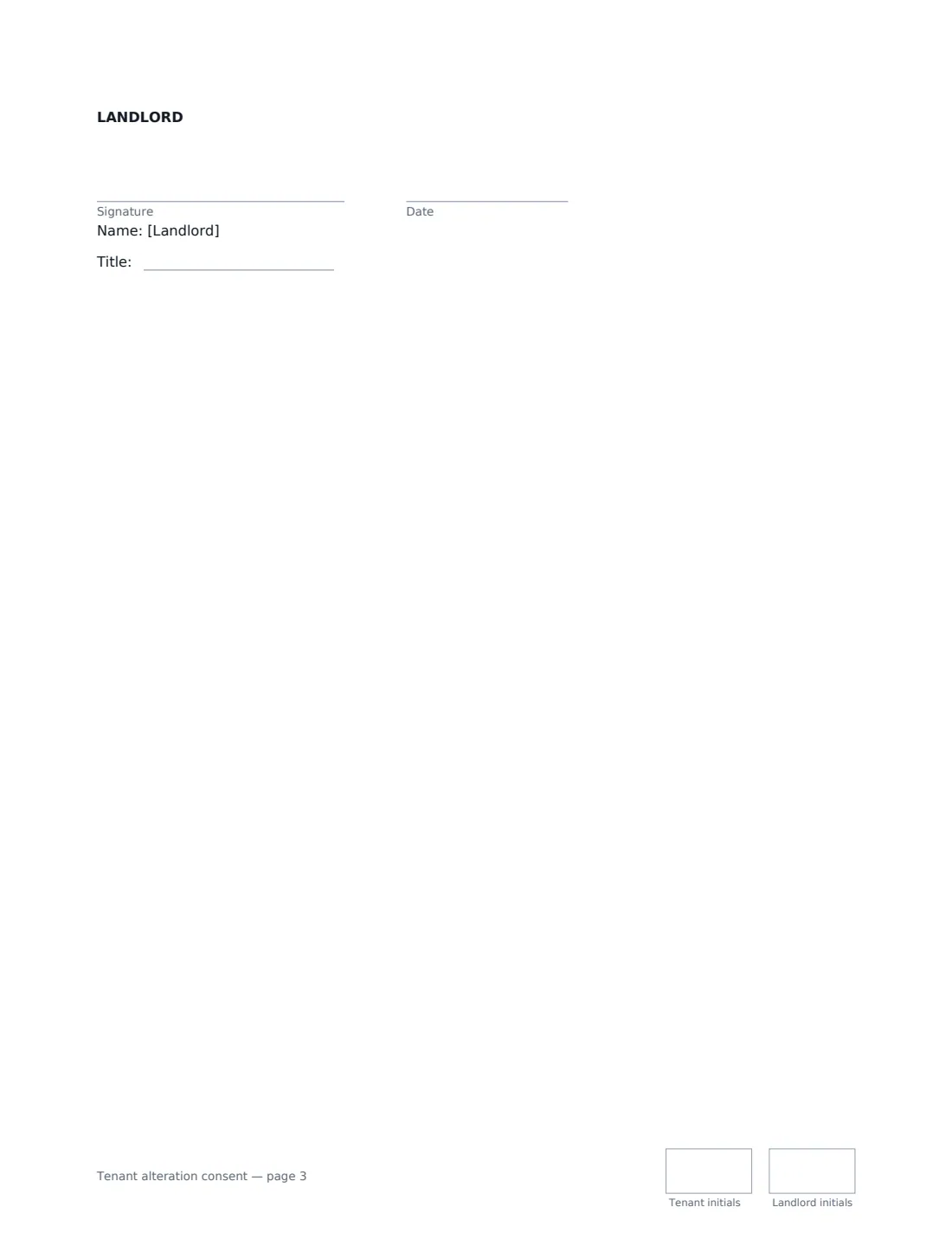
- Landlord signature and date, job title, initials on every page · The landlord or managing agent giving consent. Their signature gives consent on the conditions written here.
What the tenant alteration consent Covers
- The request
- Consent
- Standards
- Costs and responsibility
- Inspection
- When the tenancy ends
- General
Using the tenant alteration consent, step by step
1 Describe the work precisely
Say which rooms, what materials and colours, sizes and how things are fixed — for example "two floating shelves above the desk, fixed with wall plugs into plasterboard". Consent covers only what's written, so detail helps you both.
2 Say who does it and when
Choose whether you'll do it yourself, use a qualified contractor, or use one the landlord approves, and add start and finish dates if you have them.
3 Agree costs and the end of the tenancy
The tenant pays unless you enter a landlord contribution. Choose whether the tenant must restore the property when they leave, whether the alterations can stay, or whether they stay unless the landlord asks in good time for them to be removed. Add a restoration deposit only if the law allows it.
4 Send it to the landlord
Tick "This is me" for the tenant and add the landlord. Add any conditions the landlord has asked for before you send it — the landlord signs the document as written. Once both sign, the consent is filed with your tenancy documents in Files.
Tips Before You Send It
- Get consent before you buy materials or book a contractor.
- Take dated photos before and after the work — they help if restoration is discussed later.
- Electrical, gas and structural work usually needs a licensed or qualified person and sometimes a permit. Check what applies.
- If you're in a flat or condo, the building owner or association may need to approve the work too.
Sign It Online In Minutes
- Fill in the blanks. Names, dates and amounts go straight into the agreement — the preview shows exactly where.
- Name who signs. Tick “This is me” for your own part. VergeHR builds the PDF with every signature, date and initials box on the right line, and you can check or move anything before sending.
- Send it. Each signer gets a secure link and signs from any device — no account needed. The signed PDF, with an audit trail and a Certificate of Completion, is filed in Files and emailed to everyone.
Tenant alteration consent: frequently asked questions
Does the landlord have to agree?
It depends on the lease and the law. Many leases require the landlord's consent and some places say it can't be unreasonably withheld, or require landlords to allow certain changes such as accessibility adaptations. This template records a consent once it's given; it doesn't force one.
Who owns the alterations when I leave?
You choose: the tenant removes them and restores the property; they stay and belong to the landlord without payment; or they stay unless the landlord asks in writing, a reasonable time before the tenancy ends, for them to be removed.
Does the consent cover later changes?
No. It covers only the alterations described. Any other change, or a different way of doing the work, needs the landlord's further written consent.
Is an e-signed consent valid?
Electronic signatures are generally valid for ordinary agreements like this in the US (ESIGN Act and UETA), the UK, the EU (eIDAS) and Canada. VergeHR keeps an audit trail with the signed PDF.