

What is a cease and desist letter?
A cease and desist letter is a formal request to stop doing something that harms you. For a small business it is usually the first step when a competitor copies your product photos, a seller uses your brand name, someone posts false claims about you, or a former contractor breaks an agreement. It puts the other side on notice, sets out what you want done and by when, and is often enough to end the problem without going further.
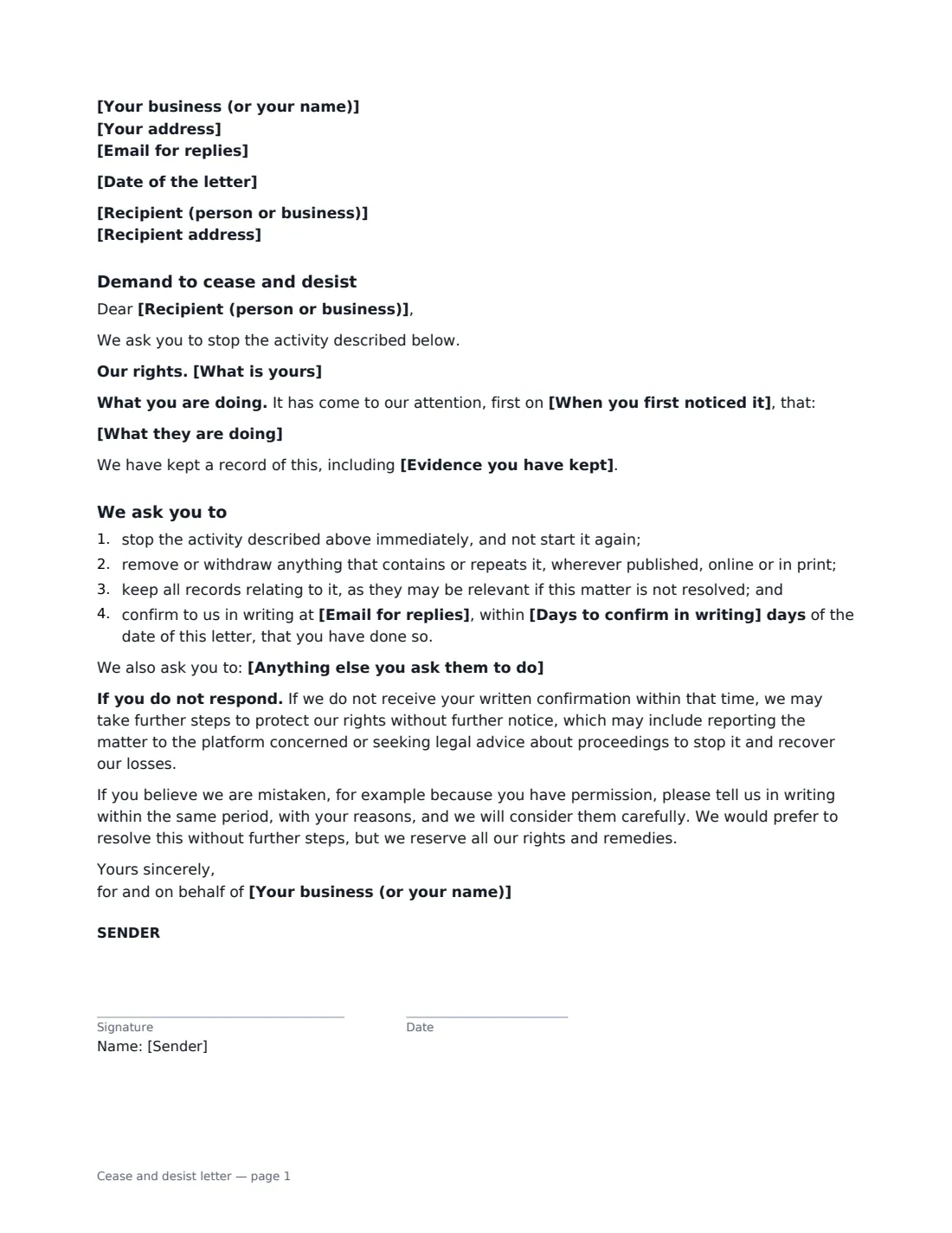
This letter adapts its main paragraph to five kinds of problem: copying your content or work, using your name, brand or trademark, false statements, breaking an agreement, or something else. You describe your rights and the conduct factually, note the evidence you have kept, and ask the recipient to stop, remove the material, preserve their records and confirm in writing by a deadline — with room for extra demands, an invitation to explain if they believe you are mistaken, and a reservation of your rights.
- Best for
- Copied content, brand or trademark misuse, false statements, breach of agreement
- Signed by
- You, for your business — the recipient does not sign
- Deadline
- You choose how many days they have to confirm in writing
- Length
- 1–2 pages
When to Use a cease and desist letter
- A competitor has copied your website text or product photos
- Someone is selling products under your brand name or a confusingly similar one
- A person or business is posting false statements about your business
- A former contractor is using your confidential information despite an NDA
- Someone keeps using your logo or content after being asked informally to stop
What You Fill In
13 blanks, then the name and email of each person who signs: sender.
1 From
- Date of the letter*
- Your business (or your name)*
- Your address
- Email for replies*
2 To
- Recipient (person or business)*
- Recipient address
3 The problem
- What the letter is about* Copying our content or work · Using our name, brand or trademark · False statements about us · Breaking an agreement with us · Something else
- What is yours*
- What they are doing*
- When you first noticed it
- Evidence you have kept
4 What you want
- Anything else you ask them to do
- Days to confirm in writing*
5 Who signs
- Sender signature and date · You, or the person signing for your business.
What the cease and desist letter Covers
- Demand to cease and desist
- We ask you to
Using the cease and desist letter, step by step
1 Choose what the letter is about
Pick the kind of problem. It chooses the wording of the paragraph that explains why the conduct is not allowed, so the letter reads correctly for copying, brand misuse, false statements or a broken agreement.
2 State your rights and the facts
Describe what is yours — the work, name, registered trademark or agreement, with dates and registration numbers. Then describe what they are doing, where and since when, sticking to facts you can show. Note the evidence you have kept; you can attach copies to the envelope.
3 Set your demands and deadline
The letter asks them to stop, remove or withdraw the material, keep their records and confirm in writing within the days you set. Add anything else you want, such as a published correction.
4 Sign and send
You sign it in VergeHR and it is filed in Files with an audit trail. Send the signed PDF by email and, if you want proof of delivery, by recorded post as well.
Tips Before You Send It
- Keep it factual and calm. Exaggerated claims or threats you would not carry out can weaken your position.
- Save dated screenshots and links before you send the letter — material often disappears once the recipient reads it.
- For copied material on a marketplace or social network, the platform's own infringement report process may be quicker. The letter can be sent alongside it.
- Whether conduct is actually unlawful depends on the facts and local law. For anything serious, have a lawyer review the letter before it goes out.
Sign It Online In Minutes
- Fill in the blanks. Names, dates and amounts go straight into the agreement — the preview shows exactly where.
- Name who signs. Tick “This is me” for your own part. VergeHR builds the PDF with every signature, date box on the right line, and you can check or move anything before sending.
- Send it. Each signer gets a secure link and signs from any device — no account needed. The signed PDF, with an audit trail and a Certificate of Completion, is filed in Files and emailed to everyone.
Cease and desist letter: frequently asked questions
Is a cease and desist letter legally binding?
No. It is a formal request, not a court order. The recipient is not obliged to sign or agree to it, but it puts them on notice, records what you asked for and when, and may be useful later if the matter goes further.
What if the recipient thinks they are entitled to do it?
The letter invites them to explain in writing, within the same deadline, if they believe you are mistaken — for example because they have permission — and says you will consider it carefully.
Does the letter threaten legal action?
It says you may take further steps without more notice, which may include reporting the matter to the platform concerned or seeking legal advice about proceedings. Only send it if you are prepared to follow up.
Can I sign a cease and desist letter electronically?
Yes. An electronic signature is generally accepted on business letters like this in the US (ESIGN Act and UETA), the UK, the EU (eIDAS) and Canada, and the signed PDF comes with an audit trail.