

What is a employee grievance form?
A grievance is a formal complaint an employee raises with their employer about something at work: how they have been treated, bullying or harassment, discrimination, pay or hours, working conditions, workload, or a decision that affects them. Putting it in writing makes it formal, gives the employer the detail it needs to look into it, and creates a dated record that it was raised.
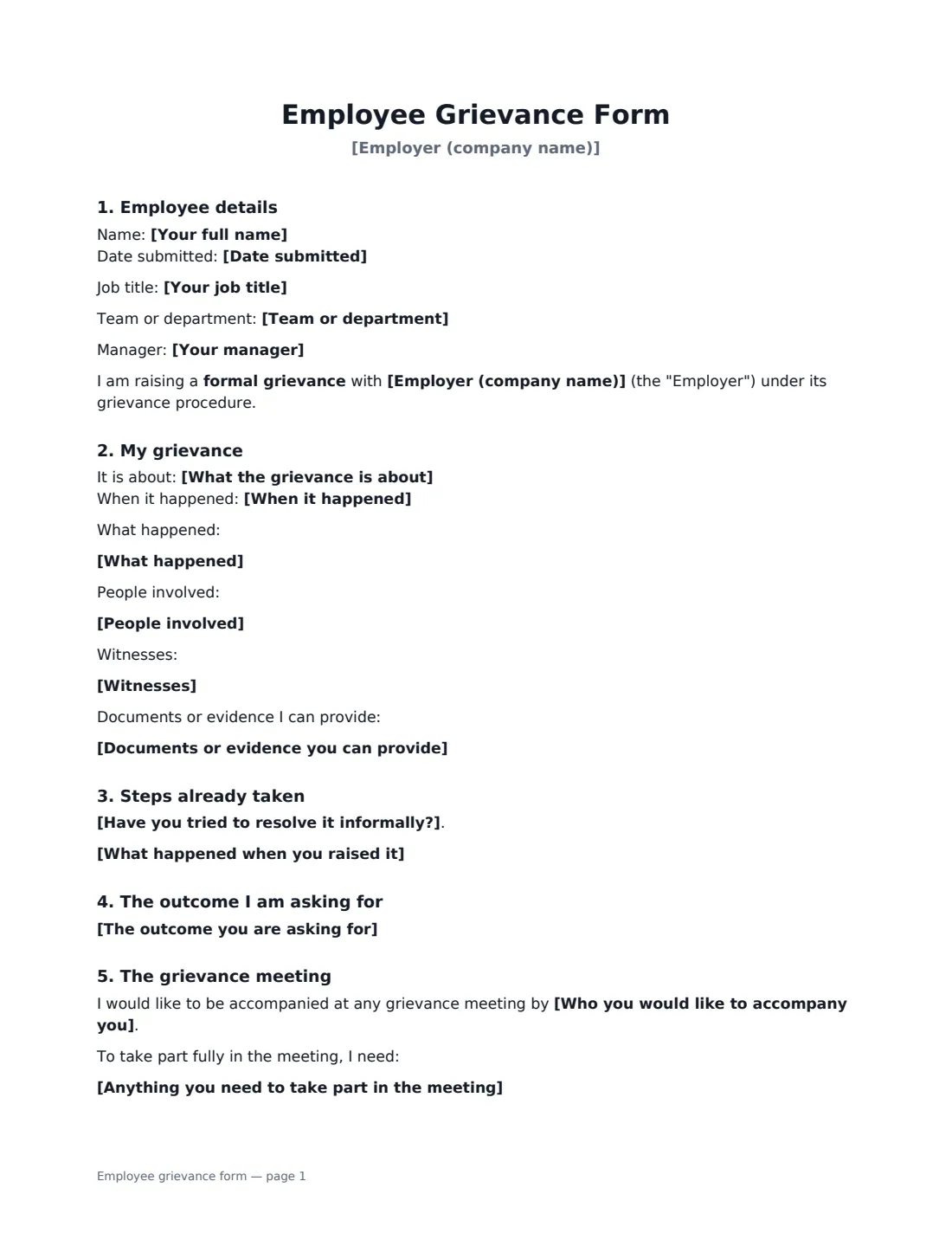
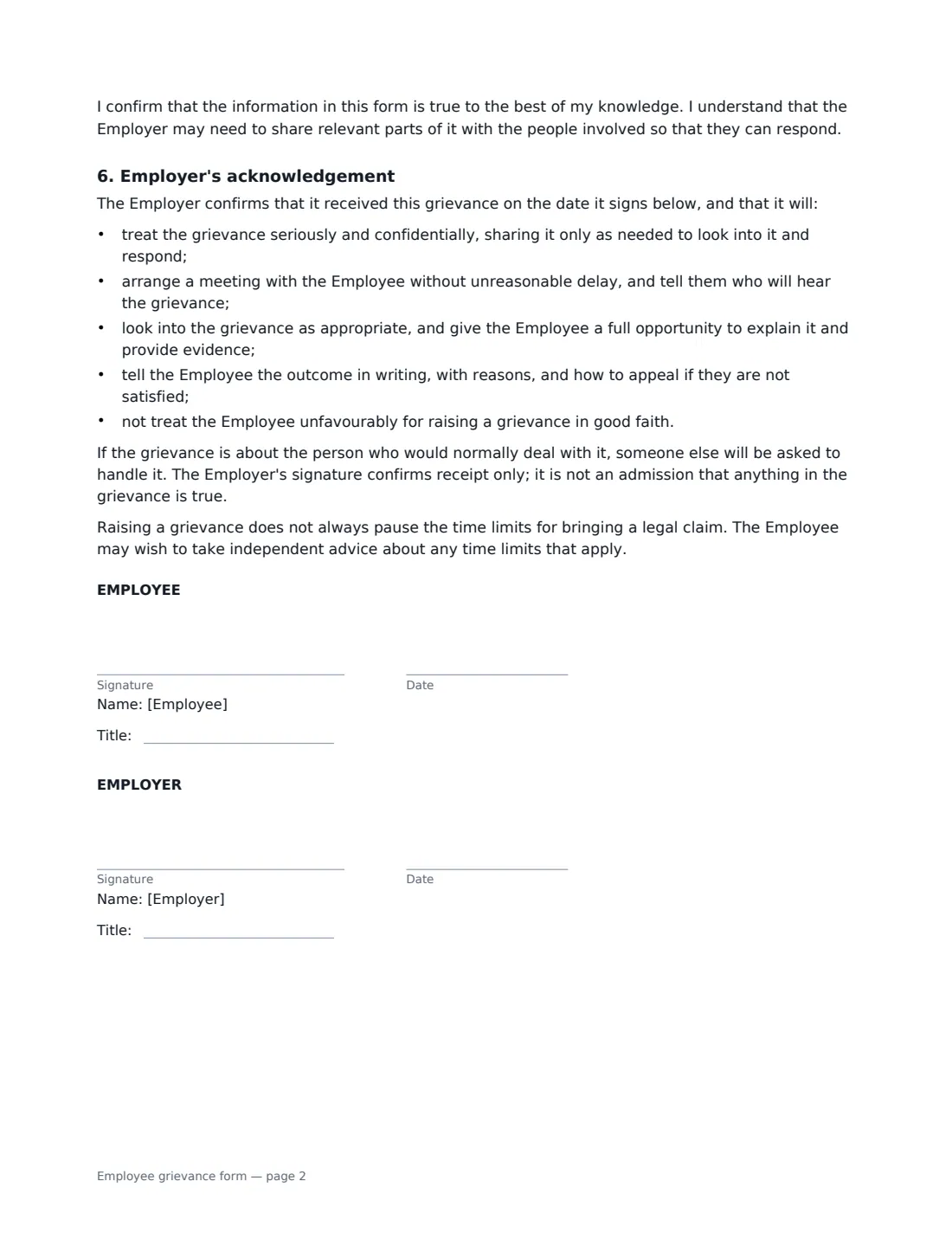
This form is written from the employee's side. It records their details, what the grievance is about and when it happened, a factual account, the people involved, witnesses and evidence, what they have already tried informally, and the outcome they are asking for. It covers who they would like to accompany them to a meeting and anything they need to take part. The employer then signs an acknowledgement committing to handle it confidentially, meet without unreasonable delay, look into it, give a written outcome with the right to appeal, and not treat the employee unfavourably for raising it.
- Best for
- Formal complaints after informal steps haven't worked, or weren't appropriate
- Signed by
- The employee raising it and the employer's HR contact or manager
- Sent by
- The employee — you fill it in and send it to your employer
- Length
- 2 pages
When to Use a employee grievance form
- Complaining formally about bullying or harassment by a colleague or manager
- Raising a concern about unpaid overtime, pay or changed hours
- Challenging a decision about shifts, duties or a transfer
- Reporting unsafe working conditions that haven't been fixed
- Following up an informal complaint that went nowhere
What You Fill In
17 blanks, then the name and email of each person who signs: employee, employer.
1 About you
- Your full name*
- Your job title
- Team or department
- Your manager
- Employer (company name)*
- Date submitted*
2 Your grievance
- What the grievance is about* Treatment by a colleague or manager · Bullying or harassment · Discrimination · Pay, hours or other terms of employment · Working conditions or health and safety · Workload or duties · A decision that affects me · Something else
- When it happened*
- What happened*
- People involved
- Witnesses
- Documents or evidence you can provide
3 What you have tried and want
- Have you tried to resolve it informally?* Yes — I raised it informally first · No — it was not appropriate or possible to raise it informally
- What happened when you raised it
- The outcome you are asking for*
4 The meeting
- Who you would like to accompany you
- Anything you need to take part in the meeting
5 Who signs
- Employee signature and date, job title · The person raising the grievance.
- Employer signature and date, job title · The HR contact or manager who receives the grievance — not the person it is about.
What the employee grievance form Covers
- Employee details
- My grievance
- Steps already taken
- The outcome I am asking for
- The grievance meeting
- Employer's acknowledgement
Using the employee grievance form, step by step
1 Set out the facts
Choose what the grievance is about, when it happened, and describe what happened in order with dates, places and what was said or done. Be specific and factual; keep opinions to a minimum.
2 Add people, witnesses and evidence
List who was involved, anyone who saw or heard what happened, and documents you can provide, such as emails, rotas or messages.
3 Say what you want to happen
Explain whether you tried to resolve it informally, then set out the outcome you're asking for — an investigation, a change, an apology. A clear outcome helps the employer respond.
4 Send it to the right person
Sign as the employee and send it to HR or a manager who isn't the subject of the grievance. When they sign, you have a dated, signed acknowledgement that it was received, filed in Files.
Tips Before You Send It
- Read your employer's grievance procedure first — it may say who to send it to and what happens next.
- Keep copies of emails, messages and notes; list them in the evidence box.
- If the grievance is about your manager, send it to HR or someone more senior.
- Raising a grievance may not pause time limits for a legal claim — consider independent advice early if you think you may need to bring one.
Sign It Online In Minutes
- Fill in the blanks. Names, dates and amounts go straight into the agreement — the preview shows exactly where.
- Name who signs. Tick “This is me” for your own part. VergeHR builds the PDF with every signature, date box on the right line, and you can check or move anything before sending.
- Send it. Each signer gets a secure link and signs from any device — no account needed. The signed PDF, with an audit trail and a Certificate of Completion, is filed in Files and emailed to everyone.
Employee grievance form: frequently asked questions
What is the difference between an informal and a formal grievance?
An informal complaint is usually a conversation with your manager. A formal grievance is put in writing under the employer's grievance procedure, which normally means a meeting, an investigation where needed, and a written outcome with a right of appeal.
Can I bring someone to the grievance meeting?
Many employers allow a colleague or trade union representative to accompany you, and in some places the law gives you that right. The form lets you say who you'd like to bring.
Does the employer's signature mean they agree with my grievance?
No. The form says the employer's signature confirms receipt only and isn't an admission that anything in the grievance is true. It does record the next steps the employer says it will take.
Is an electronically signed grievance valid?
Electronic signatures are generally valid for ordinary employment documents in the US (ESIGN Act and UETA), the UK, the EU (eIDAS) and Canada. VergeHR keeps an audit trail showing when the employer received and signed it.
Is this template free?
Yes. It is free to use with the eSignature app in VergeHR, and your employer doesn't need a VergeHR login to sign.