

What is a letter of intent?
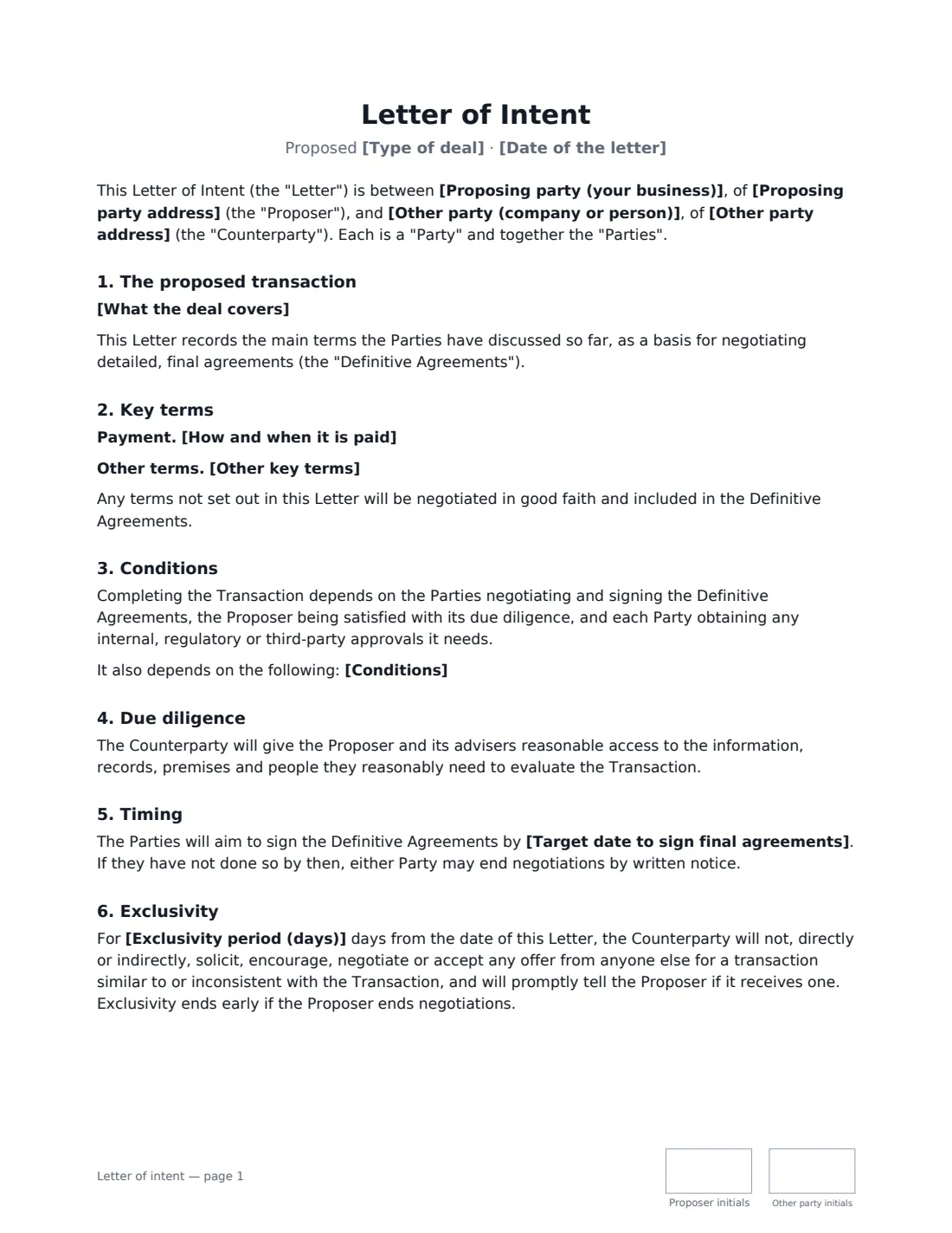
A letter of intent (LOI) — also called heads of terms, a term sheet or heads of agreement — records the main terms two parties have reached in principle before they spend time and money on the final contracts. It is common before buying a business or its assets, making an investment, or entering a partnership. It shows both sides are serious, puts the big numbers and conditions in writing so there are no surprises later, and lets the buyer or investor start due diligence.
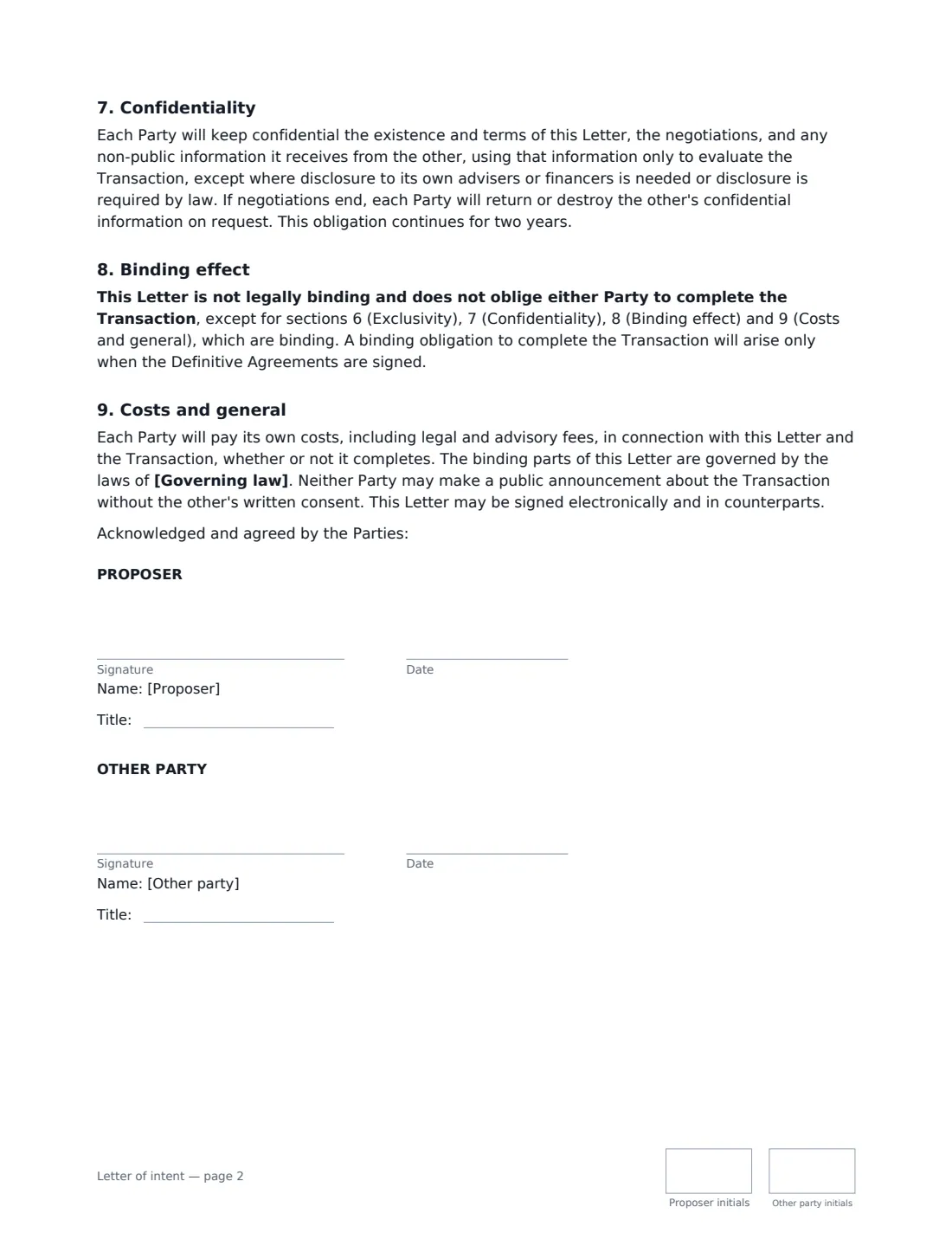
Most of an LOI is deliberately not binding: either side can still walk away. This template makes that clear, while making a few sections binding — exclusivity, confidentiality, the binding-effect clause itself, and costs and general terms. It covers the type of deal (purchase, investment or partnership), what it covers, the price or amount and how it's paid, other key terms, conditions, due diligence access, a target date for the final agreements, an optional exclusivity period, and the governing law. Both parties sign and initial each page.
- Best for
- Buying a business or assets, investing in a company, or setting up a partnership
- Signed by
- Both parties — usually an authorised person at each, with a job title
- Binding parts
- Exclusivity, confidentiality (two years), binding effect, and costs and general — the deal itself is not binding
- Length
- About 2 pages, initialled on every page
When to Use a letter of intent
- Agreeing price and terms in principle before buying a small business
- An investor setting out the amount and key terms before a funding round
- Two businesses outlining a partnership or joint venture before full contracts
- Securing a period of exclusivity while you carry out due diligence
- Giving a lender financing the deal a signed outline of the terms
What You Fill In
15 blanks, then the name and email of each person who signs: proposer, other party.
1 The deal
- Date of the letter*
- Type of deal* Purchase · Investment · Partnership
- What the deal covers*
2 Key terms
- Currency*
- Price or investment amount
- How and when it is paid
- Other key terms
- Conditions
3 Timing
- Target date to sign final agreements
- Exclusivity period (days)
- Governing law*
4 The parties
- Proposing party (your business)*
- Proposing party address
- Other party (company or person)*
- Other party address
5 Who signs
- Proposer signature and date, job title, initials on every page
- Other party signature and date, job title, initials on every page
What the letter of intent Covers
- The proposed transaction
- Key terms
- Conditions
- Due diligence
- Timing
- Exclusivity
- Confidentiality
- Binding effect
- Costs and general
Using the letter of intent, step by step
1 Choose the type of deal
Pick Purchase (you buy a business, shares or assets), Investment (you invest in the other party) or Partnership (the two of you work together). The wording of the letter adjusts to match.
2 Describe what the deal covers
Be specific — "all of the shares in Harbour Bakery Ltd, including its two shops and equipment" rather than "the business".
3 Set the key terms
Enter the price, investment or contribution (or leave it empty for a partnership with no money changing hands), how and when it is paid, and any other key terms such as an equity stake or a handover period for the current owner. Add conditions such as financing, satisfactory due diligence or landlord consent.
4 Set timing and exclusivity
Add a target date to sign the final agreements; if it passes, either side can end negotiations by written notice. Without a date, either side can end them at any time. Optionally set an exclusivity period during which the other party won't negotiate with anyone else. Choose the governing law for the binding sections.
5 Send for signature
Add the other party's signer and send. VergeHR places both signature, job-title and initials boxes, and files the signed letter in Files.
Tips Before You Send It
- Keep the LOI to the terms that really matter. Details can be negotiated in the final agreements.
- An exclusivity period is valuable to a buyer or investor — ask for it if you'll spend money on due diligence, and keep it realistic.
- Say clearly if the price may change after due diligence; the template does this for a purchase.
- Check each signer has authority to sign for their business.
- Take legal and tax advice before signing the final agreements — the LOI is only the first step.
Sign It Online In Minutes
- Fill in the blanks. Names, dates and amounts go straight into the agreement — the preview shows exactly where.
- Name who signs. Tick “This is me” for your own part. VergeHR builds the PDF with every signature, date and initials box on the right line, and you can check or move anything before sending.
- Send it. Each signer gets a secure link and signs from any device — no account needed. The signed PDF, with an audit trail and a Certificate of Completion, is filed in Files and emailed to everyone.
Letter of intent: frequently asked questions
Is a letter of intent legally binding?
This one is mostly not binding: it says clearly that neither party is obliged to complete the deal until the final agreements are signed. Only the exclusivity, confidentiality, binding-effect and costs-and-general sections are binding. Courts can treat LOIs differently depending on the wording and local law, so don't sign one you wouldn't be comfortable being held to.
What is the difference between an LOI and an MOU?
They are similar. An LOI usually sets out the terms of a specific transaction such as a purchase or investment; a memorandum of understanding is often used for broader cooperation between organisations.
What does exclusivity mean?
For the number of days you choose, the other party won't seek, encourage, negotiate or accept offers from anyone else for a similar deal, and will tell you if it receives one. Exclusivity ends early if you end negotiations.
Who pays the legal costs?
Each party pays its own costs, including legal and advisory fees, whether or not the deal completes.
Can a letter of intent be signed electronically?
Yes. Electronic signatures are generally valid for ordinary commercial documents like this in the US (ESIGN Act and UETA), the UK, the EU (eIDAS) and Canada. Some later transaction documents, such as certain property deeds, may need a wet-ink or witnessed signature. VergeHR keeps an audit trail and a Certificate of Completion with the signed PDF.