

What is a location release?
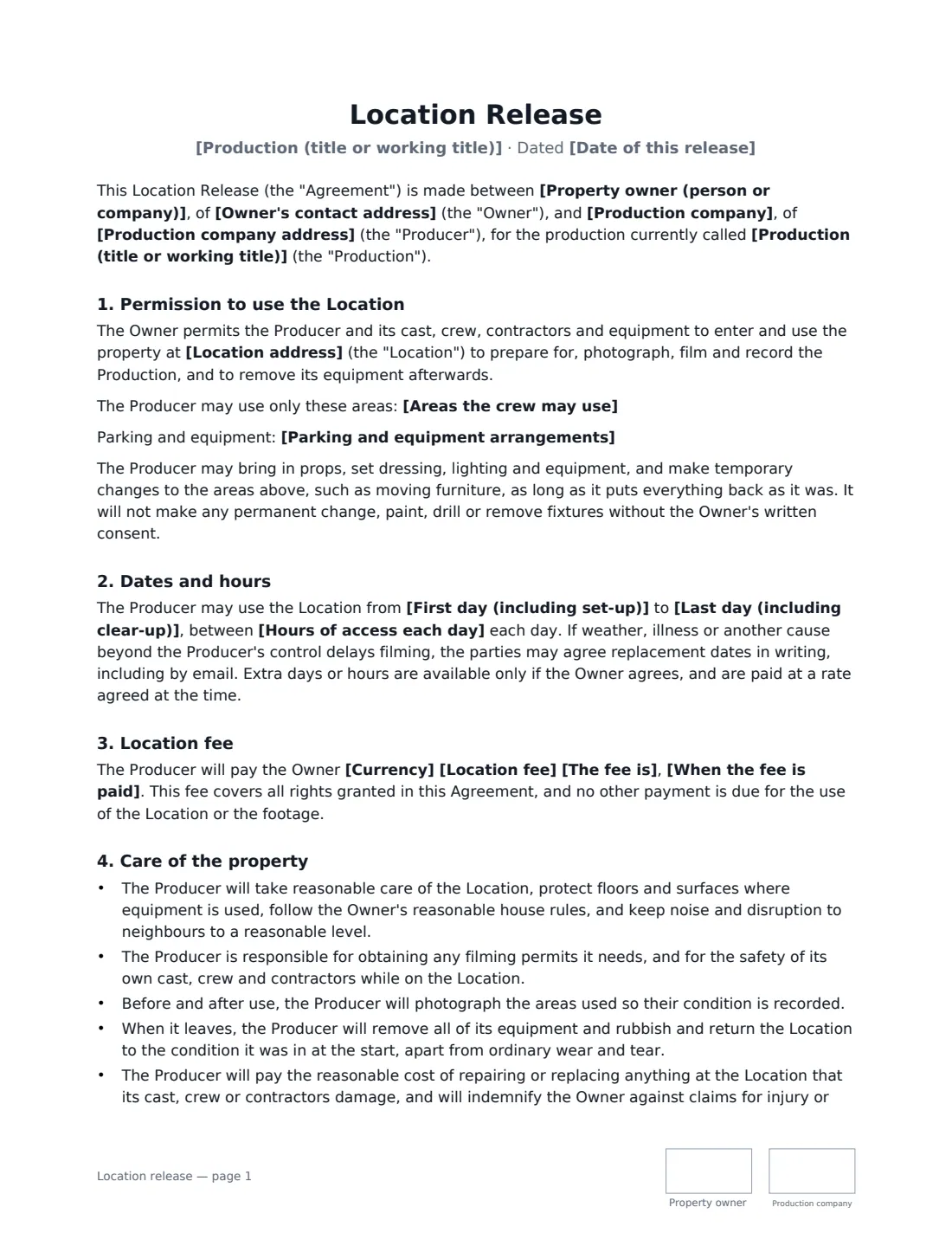
A location release (or location agreement) is the permission a production needs to film or photograph on private property, and to use the resulting footage. Without one, an owner could later object to the footage being used, or a dispute about damage could stall a project. Filmmakers, photographers, agencies and content creators use it for everything from a single-day photo shoot in someone's kitchen to a week of filming at a farm or shop.
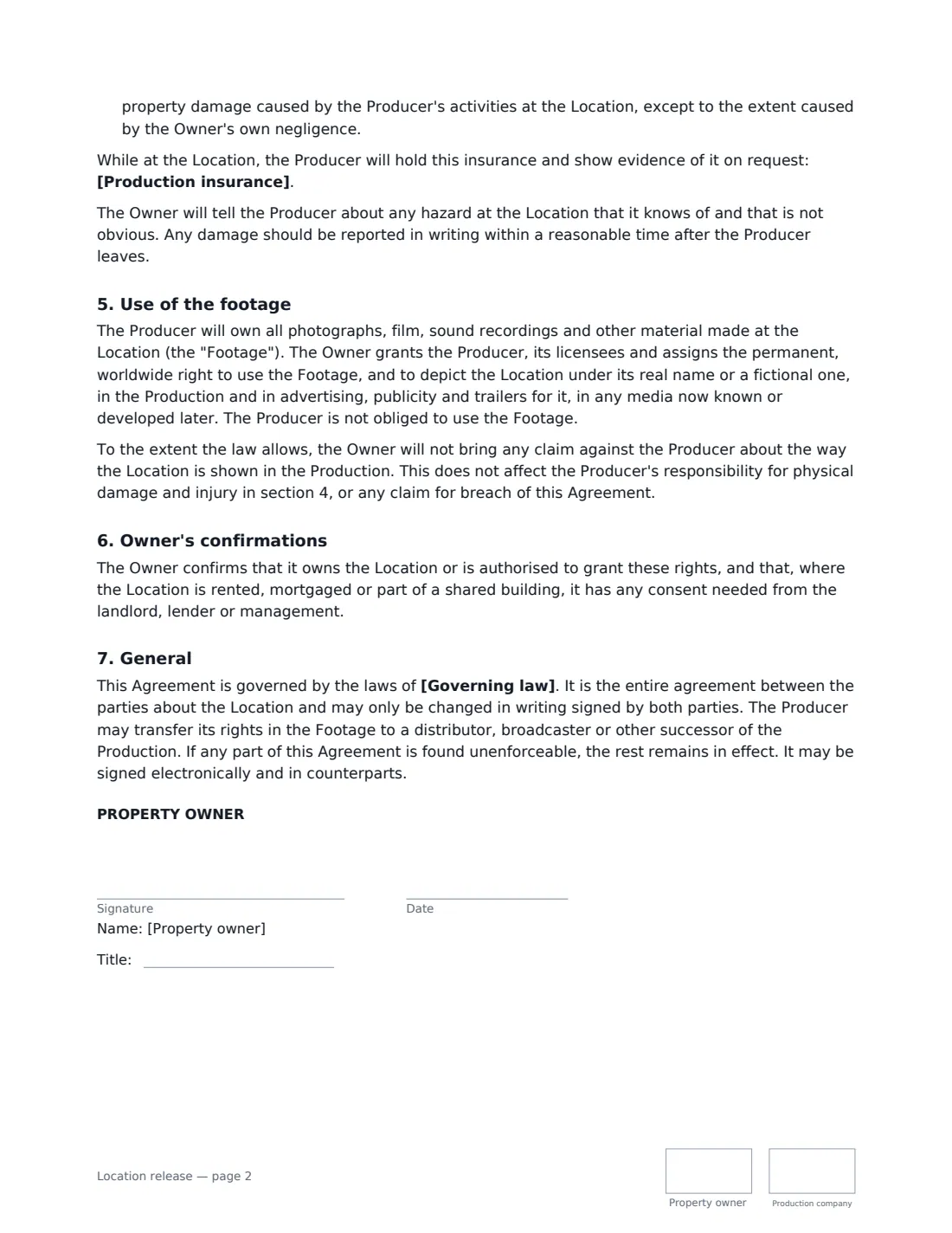
This template sets out the location address, exactly which areas the crew may use and which are off limits, parking and equipment arrangements, the dates including set-up and clear-up, and daily hours. It records the location fee (in total or per day) and when it is paid, or that the location is provided free. The producer agrees to take care of the property, get its own permits, photograph the areas before and after, restore everything, pay for any damage and indemnify the owner for injury or damage its activities cause, and can be required to hold insurance. The producer owns the footage and may use it in the production and its publicity, permanently and worldwide, and you choose whether the location and owner may be identified. The owner confirms it has the right to grant permission, including any landlord or lender consent.
- Best for
- Film, TV, commercials, music videos, photo shoots and online video
- Signed by
- The property owner and the production company
- Footage rights
- Permanent, worldwide use in the production and its publicity
- Length
- 2–3 pages, initialled on every page
When to Use a location release
- Filming a short film or drama scene in someone's home
- A fashion or product photo shoot in a café, shop or office
- Shooting a commercial or music video on a farm or private land
- A YouTube or social media production using a private venue
- A documentary crew filming inside a business
What You Fill In
19 blanks, then the name and email of each person who signs: property owner, production company.
1 The parties
- Date of this release*
- Production company*
- Production company address
- Property owner (person or company)*
- Owner's contact address
2 The production
- Production (title or working title)*
3 The location
- Location address*
- Areas the crew may use*
- Parking and equipment arrangements
4 Dates and fee
- First day (including set-up)*
- Last day (including clear-up)*
- Hours of access each day*
- Currency
- Location fee
- The fee is* in total · per day of use
- When the fee is paid
5 Care of the property
- Production insurance
6 Use of footage
- May the production identify the location?* No — the address and owner must not be identified · Yes — the location may be named or identified
- Governing law*
7 Who signs
- Property owner signature and date, job title, initials on every page · The owner of the premises, or a person authorised to grant access for them.
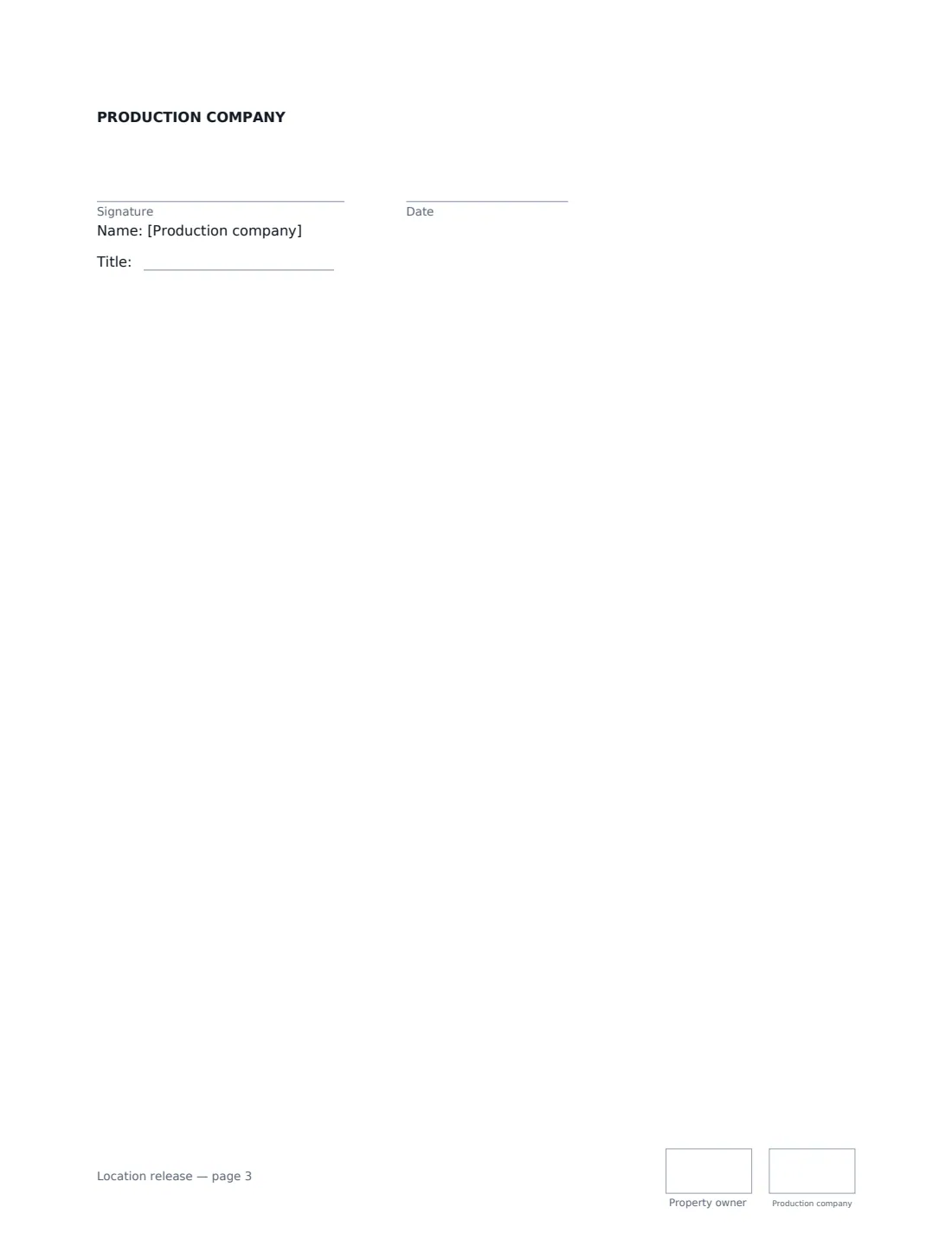
- Production company signature and date, job title, initials on every page · The company or photographer making the production, usually the producer or location manager.
What the location release Covers
- Permission to use the Location
- Dates and hours
- Location fee
- Care of the property
- Use of the footage
- Owner's confirmations
- General
Using the location release, step by step
1 Name the parties and the production
Enter your production company and the owner, plus the production's title or working title. If the owner lives elsewhere, add their contact address.
2 Describe the location
Enter the address and list the areas the crew may use and any that are off limits. Add parking and equipment arrangements if they matter — vans on the driveway, gear stored overnight.
3 Set the dates and fee
Enter the first and last days, including set-up and clear-up, and the daily hours. Add the fee and choose whether it is a total or per day, or leave the fee empty if the owner is not charging.
4 Decide on privacy and sign
Choose whether the location and owner may be identified on screen or in publicity. Add any insurance you will hold and the governing law, then send it to the owner. Both of you sign and initial each page online.
Tips Before You Send It
- Walk the location with the owner before the shoot and agree the off-limits areas face to face — then write them into the form.
- Take dated photos of every area before you set up and after you clear up; the release says you will.
- If the owner rents the property, ask them to confirm the landlord's consent in writing.
- People who appear on camera need their own release — use a photo and video release for them.
Sign It Online In Minutes
- Fill in the blanks. Names, dates and amounts go straight into the agreement — the preview shows exactly where.
- Name who signs. Tick “This is me” for your own part. VergeHR builds the PDF with every signature, date and initials box on the right line, and you can check or move anything before sending.
- Send it. Each signer gets a secure link and signs from any device — no account needed. The signed PDF, with an audit trail and a Certificate of Completion, is filed in Files and emailed to everyone.
Location release: frequently asked questions
Do I need a location release to film on private property?
It is standard practice, and distributors, broadcasters and insurers often ask for one. It shows you had permission to be there and the right to use the footage.
Who owns the footage?
The production company. The owner grants permission to use it in the production and its advertising and publicity, in any media, permanently and worldwide.
What if something is damaged during the shoot?
The producer pays the reasonable cost of repair or replacement and indemnifies the owner for injury or damage its activities cause, except where the owner's own negligence caused it. The owner should report damage in writing soon after the crew leaves.
Is an electronically signed location release valid?
Electronic signatures are generally valid for ordinary contracts like this in the US (ESIGN Act and UETA), the UK, the EU (eIDAS) and Canada. VergeHR keeps an audit trail and a Certificate of Completion with the signed PDF.