

What is a supply agreement?
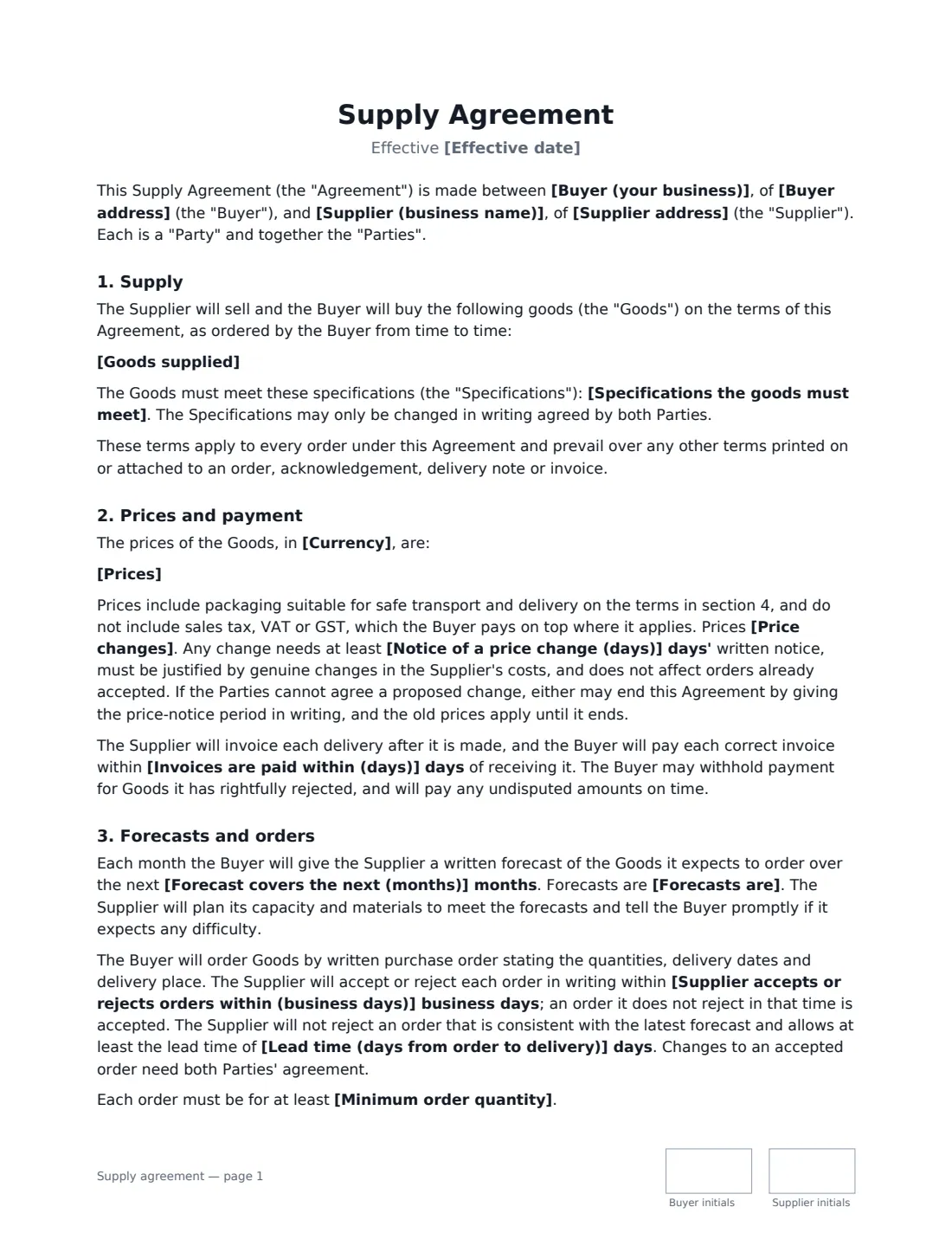
A supply agreement sets the terms for a buyer that orders the same goods or materials from a supplier again and again. Instead of negotiating every purchase order, both sides agree once how forecasts and orders work, the prices and when they can change, delivery and inspection, the quality and warranty the goods carry, and how either side can end the arrangement.
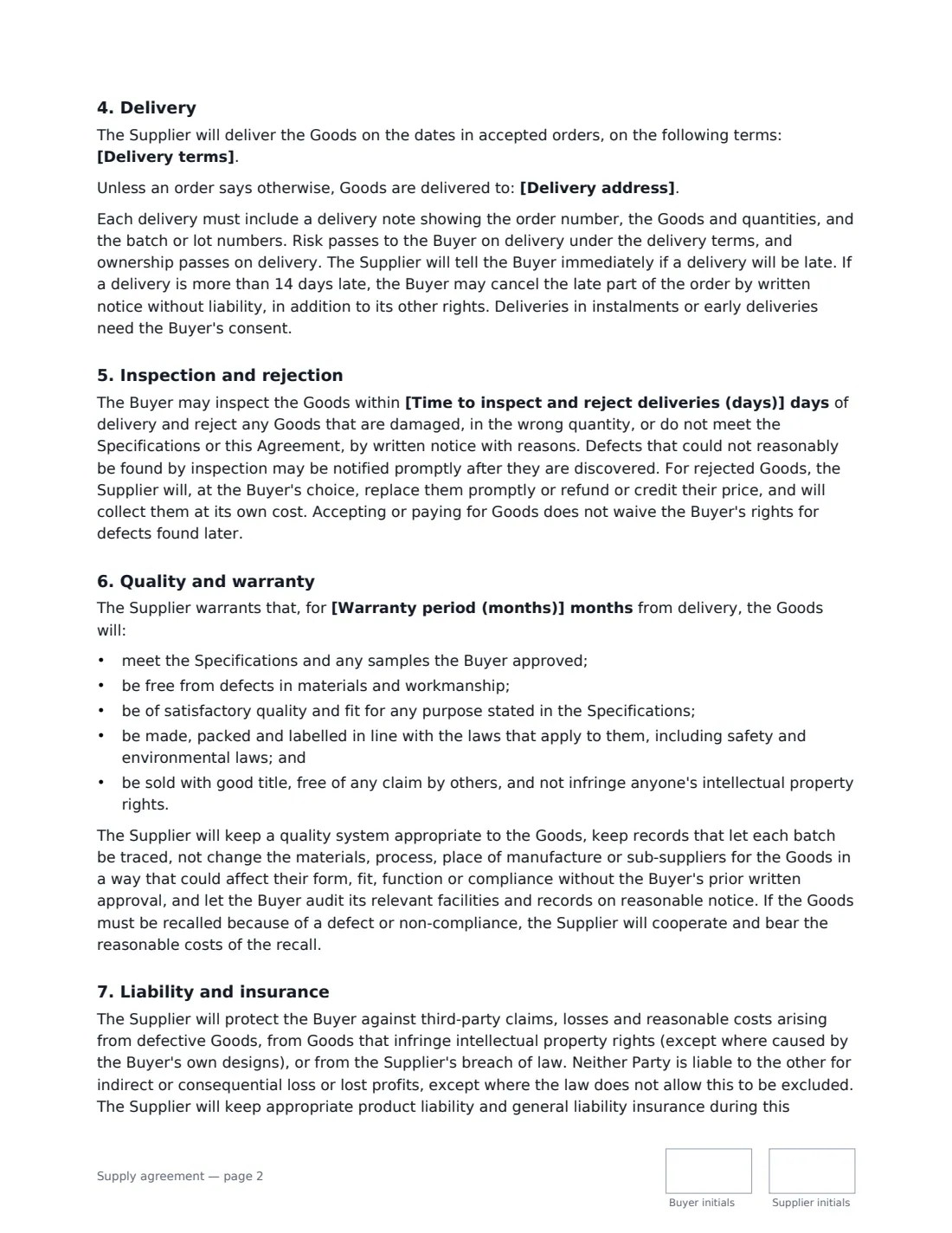
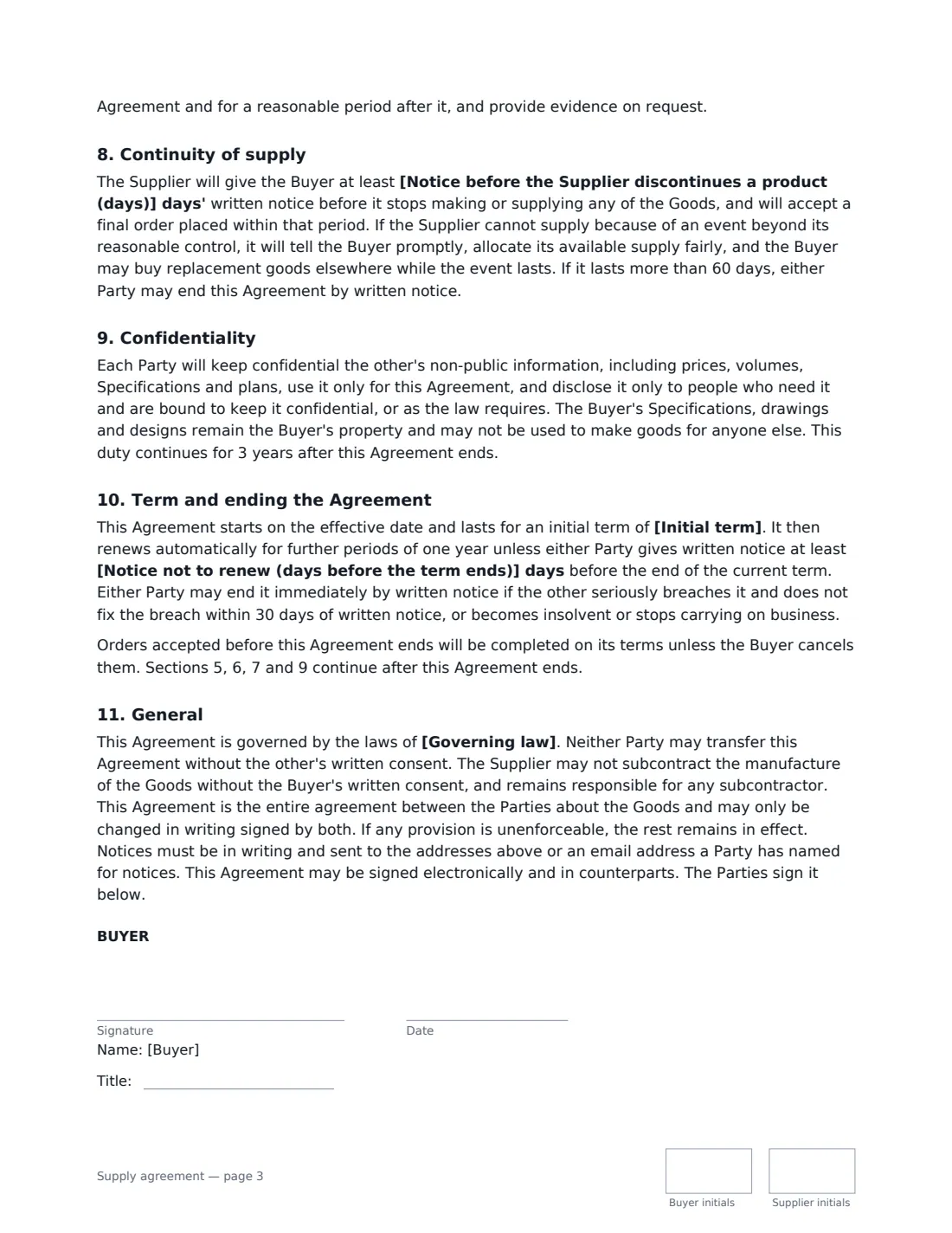
This template is written from a balanced buyer's perspective. You list the goods and prices and name the specifications they must meet, and choose whether the buyer must buy all its needs from this supplier. You set a rolling forecast (non-binding, or firm for the first month), the lead time, how quickly the supplier accepts orders, any minimum order, the Incoterms delivery terms and the inspection window. Price changes can be fixed for the term, fixed for twelve months then reviewable yearly, or changeable by the supplier with notice. The agreement also covers a warranty period you choose, change control, audits, recalls, liability and insurance, notice before a product is discontinued, force majeure and renewal.
- Best for
- Buyers of recurring materials, components, packaging or finished goods
- Signed by
- An authorised signer at the buyer and at the supplier
- Ordering
- Monthly rolling forecast plus purchase orders against it
- Length
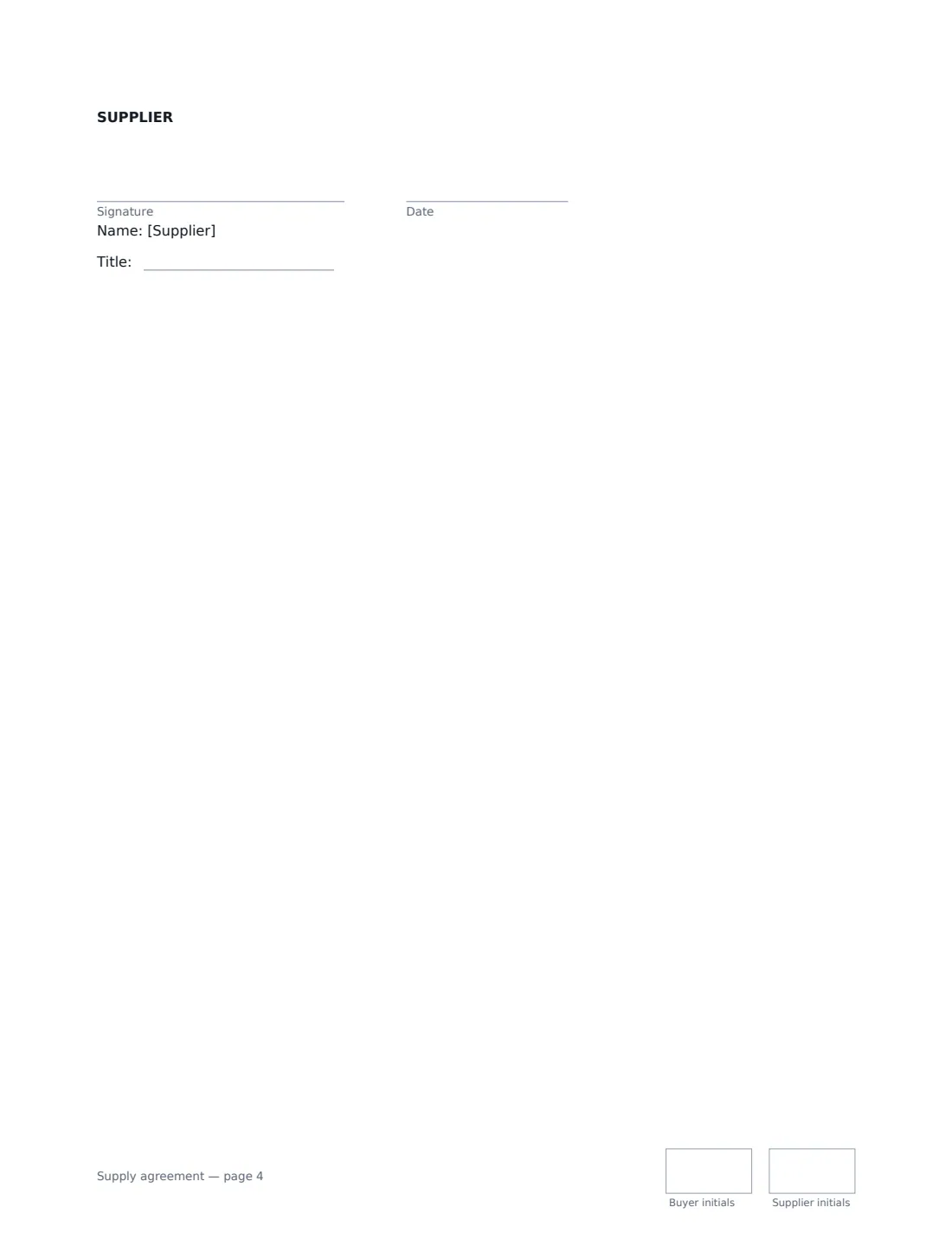
- About 4 pages, initialled on every page
When to Use a supply agreement
- A food producer securing a steady supply of packaging or ingredients
- A manufacturer buying components against a monthly forecast
- A retailer agreeing annual prices and lead times with a key supplier
- Replacing ad hoc purchase orders with a framework both sides have signed
- Setting the commercial terms before signing a supplier quality agreement
What You Fill In
26 blanks, then the name and email of each person who signs: buyer, supplier.
1 The parties
- Buyer (your business)*
- Buyer address*
- Supplier (business name)*
- Supplier address*
2 The goods
- Effective date*
- Goods supplied*
- Specifications the goods must meet
- Must the Buyer buy only from this Supplier?* No · Yes
3 Prices and payment
- Currency*
- Prices*
- Price changes* are fixed for the whole term · are fixed for the first 12 months, then may be reviewed once a year · may be changed by the Supplier with notice
- Notice of a price change (days)*
- Invoices are paid within (days)*
4 Forecasts and orders
- Forecast covers the next (months)*
- Forecasts are* estimates only and do not commit the Buyer to buy anything · binding for their first month, and estimates only after that
- Lead time (days from order to delivery)*
- Supplier accepts or rejects orders within (business days)*
- Minimum order quantity
5 Delivery and quality
- Delivery terms*
- Delivery address
- Time to inspect and reject deliveries (days)*
- Warranty period (months)*
6 Term
- Initial term* 1 year · 2 years · 3 years · 5 years
- Notice not to renew (days before the term ends)*
- Notice before the Supplier discontinues a product (days)*
- Governing law*
7 Who signs
- Buyer signature and date, job title, initials on every page · Someone authorised to sign for the business buying the goods.
- Supplier signature and date, job title, initials on every page · Someone authorised to sign for the business supplying the goods.
What the supply agreement Covers
- Supply
- Prices and payment
- Forecasts and orders
- Delivery
- Inspection and rejection
- Quality and warranty
- Liability and insurance
- Continuity of supply
- Confidentiality
- Term and ending the Agreement
- General
Using the supply agreement, step by step
1 List the goods, specifications and prices
Describe the goods and name the specification document and revision they must meet. Put each price on its own line. Decide whether the buyer is committed to buy only from this supplier.
2 Set the forecast and order process
Choose how many months each monthly forecast covers and whether its first month is binding. Set the lead time and how many business days the supplier has to accept or reject an order — an order not rejected in time counts as accepted.
3 Agree delivery and inspection
Enter the Incoterms delivery terms and default delivery address, and how long the buyer has to inspect and reject deliveries. The supplier replaces or refunds rejected goods and collects them at its cost.
4 Choose price changes, warranty and term
Pick how prices may change and the notice needed, the warranty period, the initial term, the notice not to renew, and how much notice the supplier must give before discontinuing a product.
Tips Before You Send It
- Attach or reference the exact specification revision — most quality disputes come down to which version applied.
- A binding first month of forecast gives the supplier certainty to buy materials; make sure your own planning can support it.
- Use the same Incoterms on your purchase orders as in the agreement so risk and freight costs are consistent.
- For parts where quality processes matter — inspections, corrective actions, change notices — sign a supplier quality agreement alongside this one.
- The agreement prevails over terms printed on orders and invoices, so neither side's small print quietly changes the deal.
Sign It Online In Minutes
- Fill in the blanks. Names, dates and amounts go straight into the agreement — the preview shows exactly where.
- Name who signs. Tick “This is me” for your own part. VergeHR builds the PDF with every signature, date and initials box on the right line, and you can check or move anything before sending.
- Send it. Each signer gets a secure link and signs from any device — no account needed. The signed PDF, with an audit trail and a Certificate of Completion, is filed in Files and emailed to everyone.
Supply agreement: frequently asked questions
What is the difference between a supply agreement and a purchase order?
A purchase order is a single order. A supply agreement is the framework that every order under it follows — prices, lead times, delivery, warranty, liability — so each purchase order only needs quantities and dates.
Does the buyer have to buy a minimum amount?
Only if you choose to. Forecasts can be estimates only, or binding for their first month, and you can make the buyer commit to buy all its requirements from the supplier. Otherwise the buyer may buy the goods elsewhere.
What if the supplier stops making a product?
The supplier must give the notice you choose before discontinuing any of the goods and accept a final order in that period. If supply is interrupted by events beyond its control, it must allocate available supply fairly and the buyer may source elsewhere meanwhile.
Is an e-signed supply agreement enforceable?
Electronic signatures are generally valid for ordinary commercial contracts in the US (ESIGN Act and UETA), the UK, the EU (eIDAS) and Canada. VergeHR keeps an audit trail and a Certificate of Completion with the signed PDF.