

What is a yard sharing agreement?
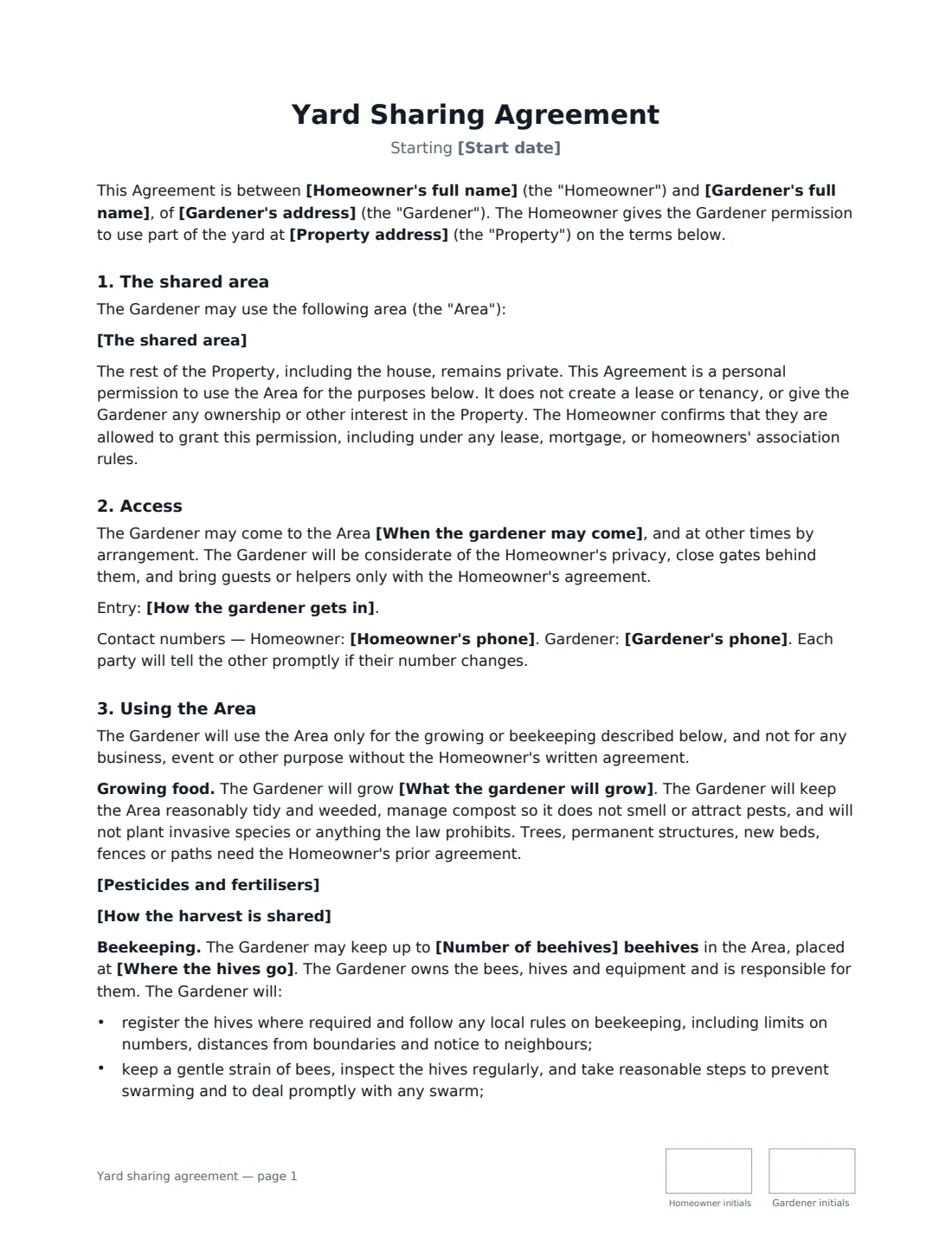
Yard sharing matches people with unused garden space to people who want to grow food or keep bees but have nowhere to do it. It works best when both sides agree the details up front: exactly which part of the yard, when the gardener can come and how they get in, who pays for water, what chemicals are allowed, where the hives go, and how much of the harvest or honey the homeowner gets.
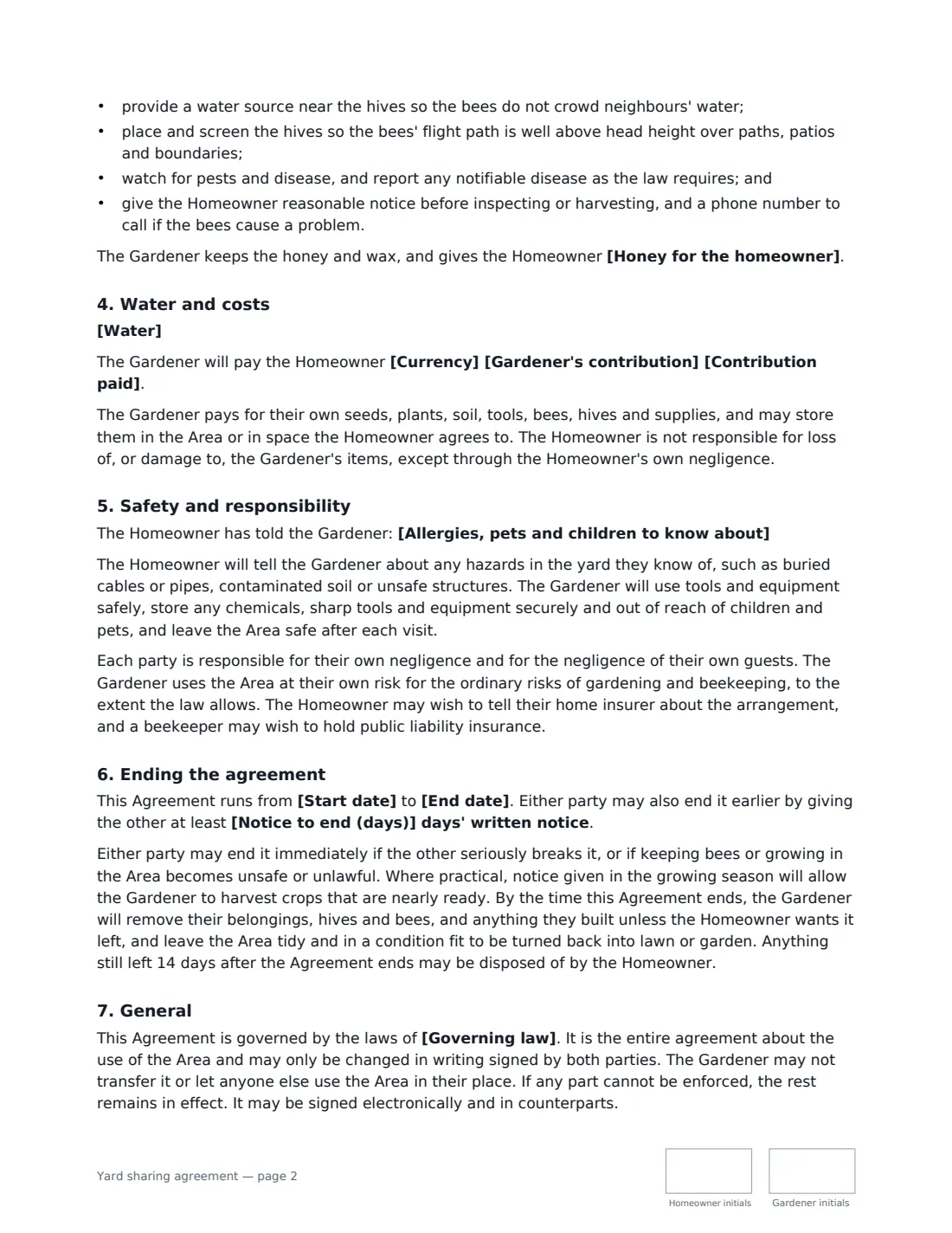
This template covers the shared area and a clear statement that it's a permission to use the space, not a lease; access times and entry; how the area may be used; growing rules and your choice on pesticides and fertilisers; the harvest split; optional beekeeping clauses on registration, swarms, water, hive placement, disease and notice; the honey share; water and any contribution; who pays for supplies; allergies, pets and children the gardener should know about; hazards, safety and responsibility; ending with notice and a chance to harvest; clearing the area; and governing law.
- Best for
- Homeowners sharing yard space with a neighbour, friend or community gardener or beekeeper
- Signed by
- The homeowner and the gardener
- Covers
- Growing food, keeping bees, or both — beekeeping clauses appear only if you enter hives
- Length
- 2–3 pages, initialled on every page
When to Use a yard sharing agreement
- An older homeowner letting a young family grow vegetables in beds they can no longer manage
- A beekeeper hosting two hives at the bottom of a neighbour's garden
- A community-garden group using a private backyard in exchange for a share of produce
- A tenant with the landlord's permission sharing a yard with a keen gardener
- Formalising a friendly arrangement that's grown into a full vegetable plot
What You Fill In
24 blanks, then the name and email of each person who signs: homeowner, gardener.
1 The agreement
- Start date*
- End date
- Notice to end (days)*
- Governing law*
2 The homeowner
- Homeowner's full name*
- Property address*
- Homeowner's phone
3 The gardener
- Gardener's full name*
- Gardener's address
- Gardener's phone
4 The area and access
- The shared area*
- When the gardener may come*
- How the gardener gets in
5 Growing
- What the gardener will grow
- Pesticides and fertilisers* Only organic methods may be used — no synthetic pesticides, herbicides or fertilisers. · Products may be used only with the Homeowner's prior agreement, following the label instructions. · Any lawful garden product may be used, following the label instructions.
- How the harvest is shared
6 Beekeeping
- Number of beehives
- Where the hives go
- Honey for the homeowner
7 Water and costs
- Water* The Gardener may use the Homeowner's outdoor tap free of charge, sensibly and within any local watering restrictions. · The Gardener may use the Homeowner's outdoor tap and will contribute to the water bill as set out below. · The Gardener will bring or collect their own water, for example in rain barrels they install with the Homeowner's agreement.
- Currency*
- Gardener's contribution
- Contribution paid per month · per month during the growing season · per year · once for the whole agreement
- Allergies, pets and children to know about
8 Who signs
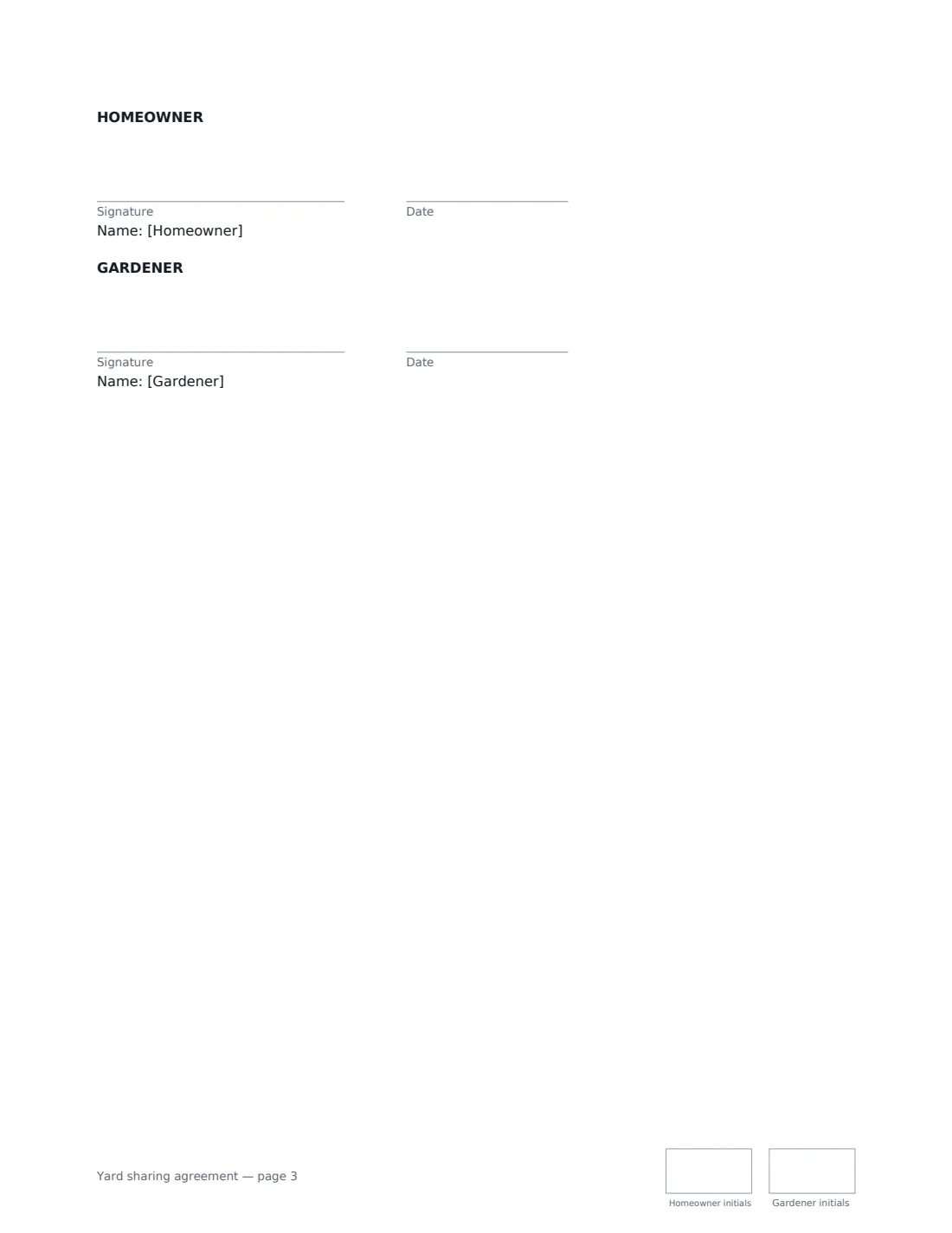
- Homeowner signature and date, initials on every page · The owner (or tenant with permission) of the property whose yard is shared.
- Gardener signature and date, initials on every page · The person who will grow food or keep bees in the yard.
What the yard sharing agreement Covers
- The shared area
- Access
- Using the Area
- Water and costs
- Safety and responsibility
- Ending the agreement
- General
Using the yard sharing agreement, step by step
1 Describe the area and access
Describe exactly which part of the yard is shared — size, beds and any shed space — then set when the gardener may come and how they get in, for example through the side gate and never through the house.
2 Set the growing rules
Describe what will be grown and choose the rule on pesticides and fertilisers: organic only, by agreement, or any lawful product. Edit the pre-filled harvest split to suit you.
3 Add beehives if needed
Enter the number of hives, where they go, and the honey the homeowner receives. Leave the number empty and the beekeeping clauses don't appear. Tell the gardener about any sting allergies, pets or children in the household.
4 Water, notice and send
Choose how water is provided and any contribution, set an end date or leave it open-ended, and choose the notice period. Add the gardener as signer and send.
Tips Before You Send It
- Walk the area together and take photos before starting — it makes returning the space at the end easy to agree.
- Many places have rules on keeping bees: registration, the number of hives, distances from boundaries or notice to neighbours. The beekeeper should check before the hives arrive.
- Mention buried cables, pipes or old contaminated soil — the template asks the homeowner to disclose hazards they know of.
- Let your home insurer know about the arrangement, and ask a beekeeper whether they hold liability insurance.
Sign It Online In Minutes
- Fill in the blanks. Names, dates and amounts go straight into the agreement — the preview shows exactly where.
- Name who signs. Tick “This is me” for your own part. VergeHR builds the PDF with every signature, date and initials box on the right line, and you can check or move anything before sending.
- Send it. Each signer gets a secure link and signs from any device — no account needed. The signed PDF, with an audit trail and a Certificate of Completion, is filed in Files and emailed to everyone.
Yard sharing agreement: frequently asked questions
Does a yard sharing agreement create a tenancy?
The template is written as a personal permission to use part of the yard for growing or beekeeping. It says it does not create a lease or tenancy or give the gardener any interest in the property. How an arrangement is treated in the end depends on local law and how it works in practice.
What happens to crops when the agreement ends?
Where practical, notice given in the growing season allows the gardener to harvest crops that are nearly ready. By the time the agreement ends the gardener removes their belongings, hives and bees and leaves the area tidy; anything still left 14 days after it ends may be disposed of by the homeowner.
Who is responsible if someone is stung or hurt?
Each party is responsible for their own negligence and their own guests. The gardener uses the area at their own risk for the ordinary risks of gardening and beekeeping, to the extent the law allows, and the beekeeper must keep the hives safely placed and managed.
Is a yard sharing agreement signed online valid?
In most countries, including the US (ESIGN Act and UETA), the UK, the EU (eIDAS) and Canada, an electronic signature is generally valid for an ordinary agreement like this one. VergeHR keeps an audit trail and a Certificate of Completion with the signed PDF.
Is this template free?
Yes. The template is free to use with the eSignature app in VergeHR. The person you send it to doesn't need a VergeHR login to sign.